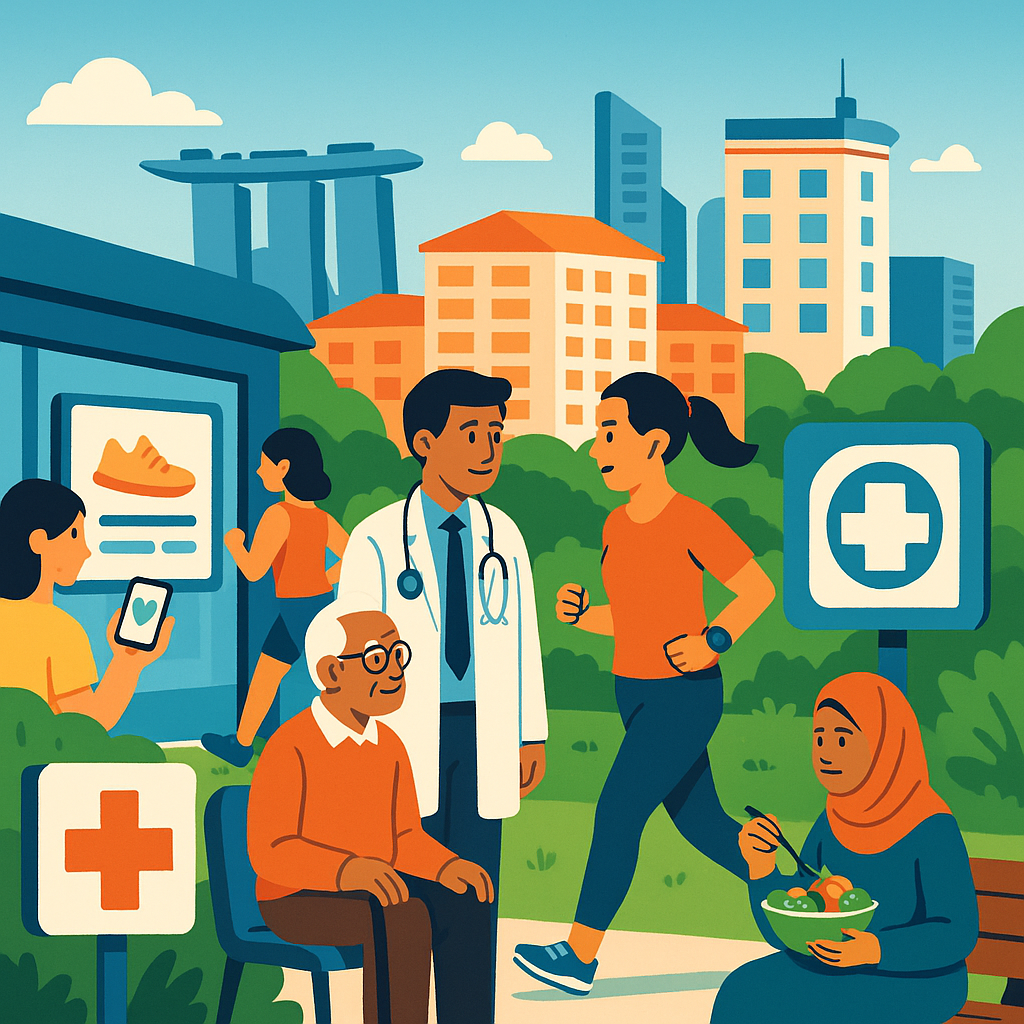
The Integration Imperative
Genomic data alone cannot predict disease. Clinical records alone cannot explain treatment response. Lifestyle data alone cannot identify actionable risk. The promise of precision health lies in integration—and integration at scale is among the hardest problems in biomedical informatics.
Singapore’s PRECISE programme has tackled this challenge directly, building secure infrastructure that links genomic data with electronic health records, behavioural risk factors, imaging, and digital phenotyping.
The Technical Architecture
In September 2026, PRECISE announced a collaboration with Lifebit, a biomedical data platform, to advance the use of clinico-genomic data for precision medicine. The partnership addresses what Lifebit describes as the “high complexity of securely linking multi-modal datasets”—genomics, EHRs, registries, imaging, and lifestyle data—while maintaining privacy and governance standards.
The platform enables researchers to query linked datasets without moving or exposing raw patient data, a critical requirement for both ethical compliance and public trust.
AI as the Analytical Engine
Data integration creates the substrate; AI provides the analytical horsepower. Singapore’s Ministry of Health has committed S$2 billion to preventive and precision medicine, with a substantial portion directed toward developing digital tools and AI models trained on local clinical data and practice guidelines.
Initial AI applications target cardiometabolic and ophthalmic diseases—conditions with high prevalence in Singapore’s ageing population. By training models on local data rather than importing algorithms validated elsewhere, Singapore aims to ensure that AI-driven clinical decision support reflects the actual biology and epidemiology of its population.
A Clinical AI Case: Predicting Kidney Disease
One example of this integration in action is HealthVector Diabetes (HVD), a clinical decision support system deployed in Singapore hospitals. Using “digital twin” AI technology, HVD can predict diabetic kidney disease risk up to three years in advance, delivering risk scores directly within electronic medical records.
The system demonstrates how linked data—genomic risk variants, longitudinal clinical measurements, and lifestyle factors—can be synthesised into actionable predictions that clinicians can use at the point of care.
The Governance Foundation
None of this works without governance. Singapore’s precision health data infrastructure operates under strict anonymisation protocols, with PRECISE emphasising that data are used only for research purposes and never for insurance or employment discrimination. The GA4GH Regional Hub designation granted to PRECISE in 2026 positions Singapore to help shape international standards for genomic data sharing and security.
The Competitive Edge
What distinguishes Singapore’s data strategy is its vertical integration—from national policy through clinical implementation to AI-driven discovery. The country has not simply built a biobank; it has built a learning health system in which every patient encounter has the potential to generate insights that improve care for the next patient.