The Beach as the Next Competitive Frontier
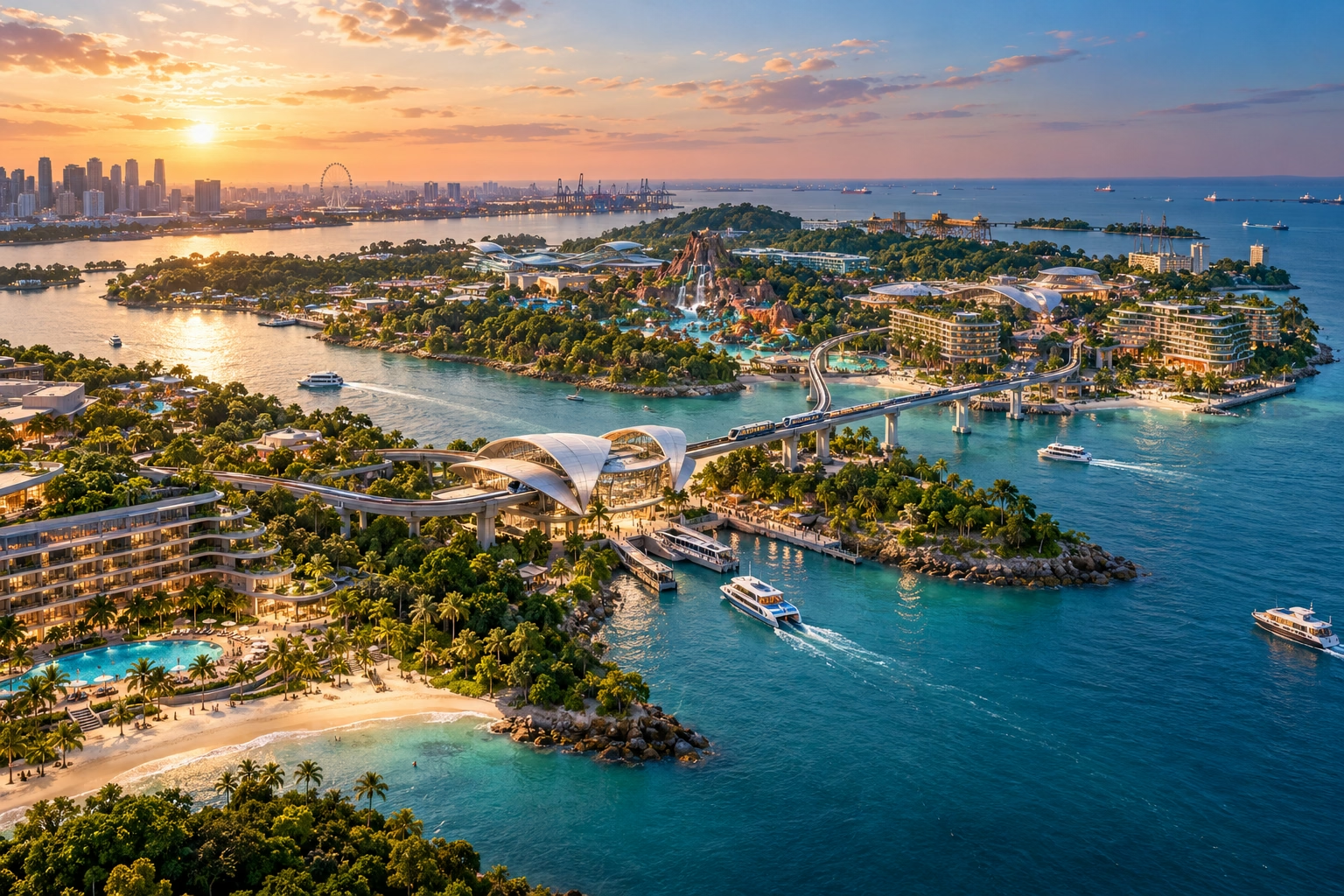
Sentosa’s beaches have long been the island’s most democratic asset—free to access, open to all, and central to the Singaporean memory of Sentosa. The GSMP does not treat them as background scenery. Siloso, Palawan, and Tanjong are being reimagined with new beach club concepts, coastal activities, treetop dining, and a floating boardwalk linking offshore islets. The islet-hopping experience is designed to turn the coastline into a navigable leisure network rather than a linear strip of sand.
Sunrise and Sunset as Design Logic
SDC has framed the beach refresh around two daily rituals: sunrise and sunset. This is more than marketing language. It signals a shift from midday-centric beach programming to a day-to-night model that extends dwell time and spreads visitor load across the island. Beach clubs oriented toward sunset, for example, create a natural post-attraction evening economy that complements the theme parks and the Sensorium’s festival programming.
Coastal Protection as a Non-Negotiable
The beach redevelopment is inseparable from coastal defence. Singapore is a low-lying coastal city, and sea-level rise poses an existential threat to Sentosa’s shoreline. The GSMP incorporates site-specific coastal protection studies covering approximately 16 kilometres of Sentosa’s coastline. The reimagined beaches are therefore not just leisure infrastructure; they are flood-defence infrastructure with a hospitality layer on top. This dual-purpose design is what distinguishes the Greater Sentosa approach from a conventional beach resort upgrade.
The Real-World Tension: Public Access vs. Commercial Activation
The success of the beach redevelopment will depend on how SDC balances commercial beach clubs with public access. Sentosa’s beaches are a shared civic asset, and any perception that they are being privatised for premium users would undermine the “island for Singaporeans” narrative that SDC has carefully cultivated. The floating boardwalk and islet-hopping concepts offer a way to expand capacity without fencing off existing sand—but the governance details remain unpublished.