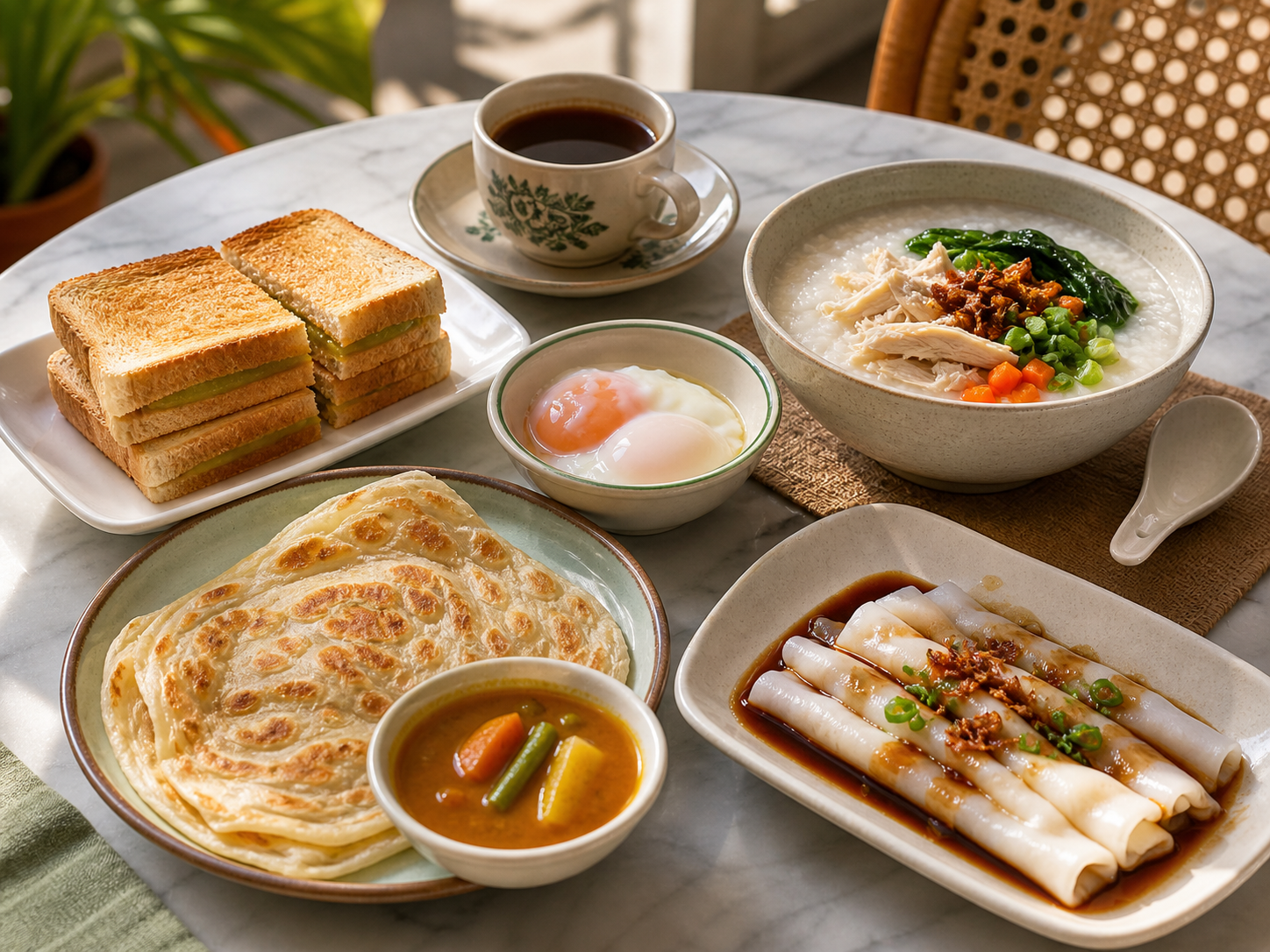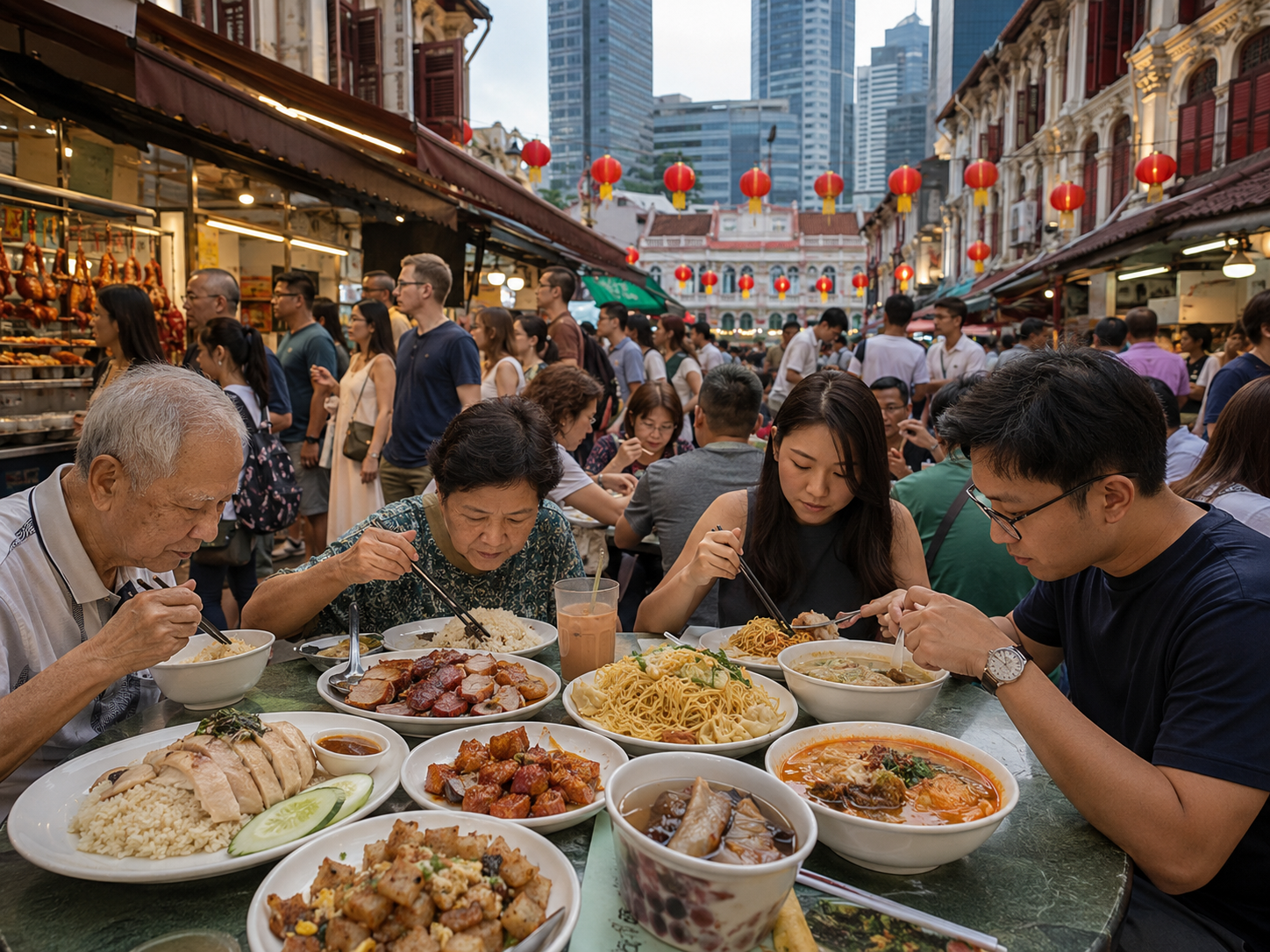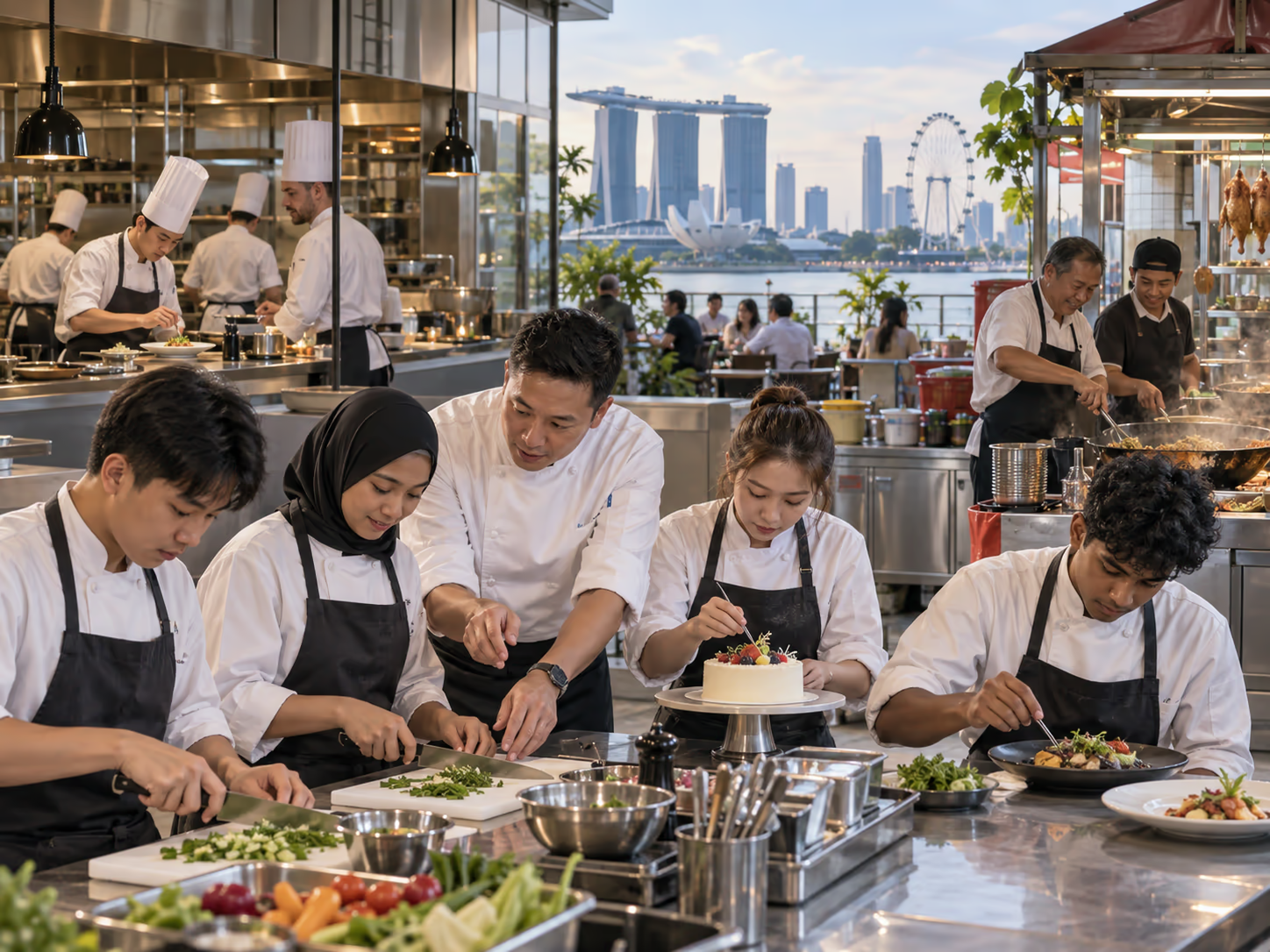
Singapore’s culinary identity rests on two parallel pillars: the fine-dining kitchens of Michelin-starred restaurants and the open-air hawker centres that UNESCO recognised as intangible cultural heritage in 2020. While the former receives attention through culinary school rankings and celebrity chef alumni, the latter faces a succession crisis that government policy is now addressing through structured training.
The Succession Problem
Singapore’s hawker population is ageing. Many veteran hawkers have operated the same stall for decades, perfecting signature dishes that exist nowhere else. When they retire, the recipes often retire with them. The economic logic of hawker operation—long hours, modest margins, physical demands—makes succession unattractive to younger Singaporeans without structured support.
The Hawkers’ Development Programme Structure
The National Environment Agency’s Hawkers’ Development Programme addresses this through a three-stage model. Stage one is a five-day training course covering food safety and hygiene, fundamental food preparation and cooking techniques, and the tools needed to draw up a simple business plan. Stage two is apprenticeship, and stage three is operation of an incubation stall under supervision.
The programme offers up to 90% course fee subsidy under the Mid-Career Enhanced Subsidy, with training allowances of up to S$1,000 per month—a recognition that learners cannot absorb months of unpaid training while supporting themselves.
The Hawkers Succession Scheme: Targeted Transmission
The Hawkers Succession Scheme (HSS), updated in August 2026, is a more targeted intervention. Under the HSS, selected potential successors undergo a three-month apprenticeship under veteran hawkers to learn both the signature dishes and the operational routines of running a successful hawker business. The programme is explicitly designed around skill transfer from named veteran to named successor, rather than generic hawker training.
This approach draws on a recognition that hawker skills are not fully codified in recipe books. Timing, heat control, ingredient sourcing, and customer rhythm are embodied knowledge. The apprenticeship structure treats the veteran hawker as the curriculum.
The Human Dimension: Second Chances and Heritage
A Channel NewsAsia documentary series premiering in July 2026, The Hawker Apprentice, follows three former offenders paired with veteran hawkers determined to pass on their craft. The series illustrates a secondary function of hawker training programmes: they create employment pathways for populations facing labour market exclusion, while simultaneously serving the heritage preservation objective.
Integration with Formal Culinary Education
Hawker training does not operate in isolation from Singapore’s broader culinary education ecosystem. ITE offers short courses in hawker cuisine—chicken rice, char kway teow, and Hokkien mee—that provide foundational technique training for aspiring hawkers or F&B employees seeking hawker-specific skills. These courses use the same SkillsFuture funding mechanisms as other culinary short courses.
The significance of this integration is structural. Hawker food is not treated as a separate, informal category of cooking outside the credential system. It is embedded within the same training architecture—WSQ frameworks, SkillsFuture funding, structured apprenticeship—that produces professional chefs. For a culinary culture whose global reputation depends as much on its hawker centres as its fine-dining rooms, this integration is not symbolic. It is the mechanism through which a heritage cuisine is translated into a transferable, fundable, and sustainable professional skill.