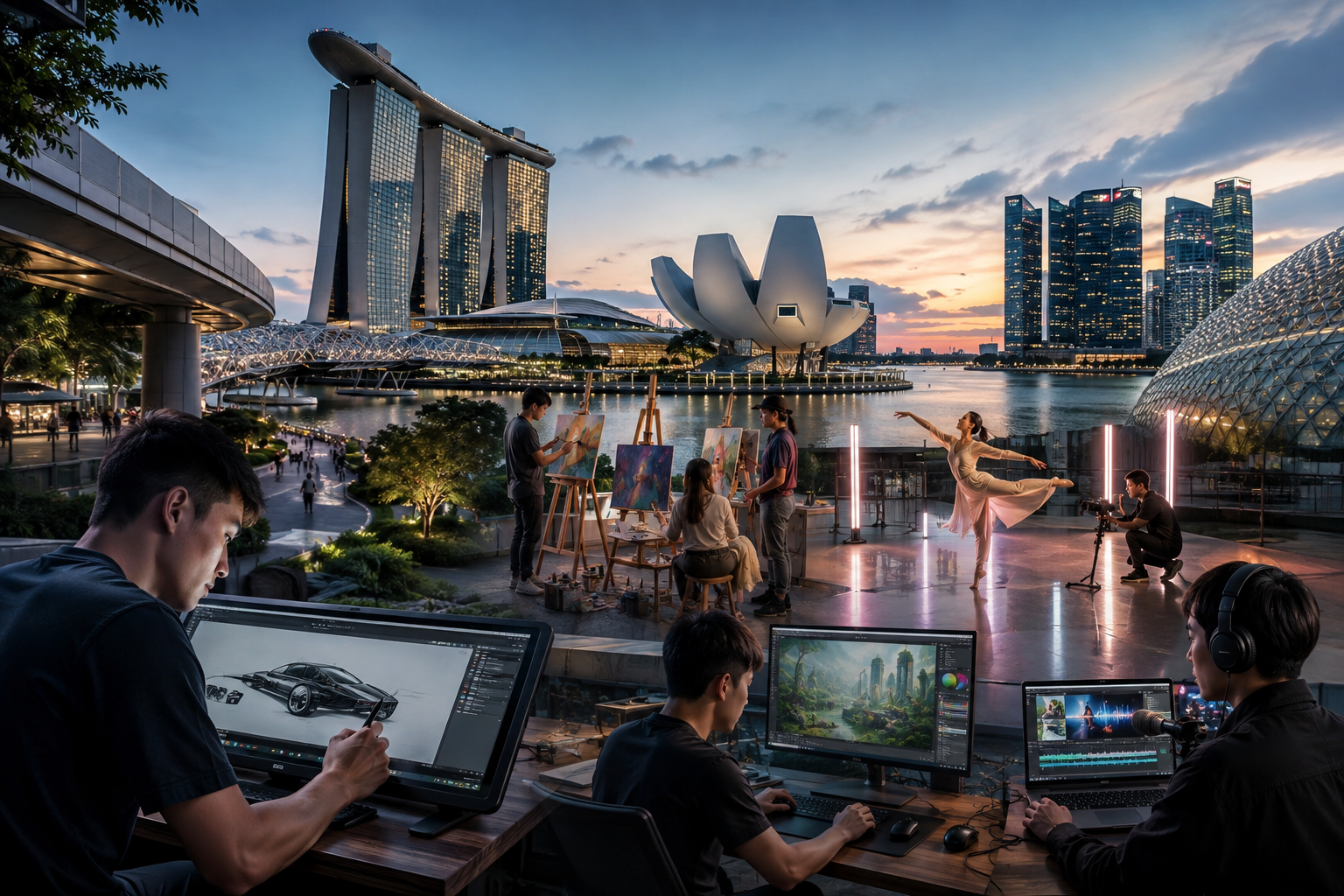
Singapore’s creative industry is moving toward a more unified model. Designers, artists, and digital creators no longer operate in separate silos. Instead, they collaborate on projects that combine product design, immersive art, and digital distribution. The Ministry of Culture, Community and Youth’s 2026 update highlights this convergence as a key driver of cultural and economic value (MCCY).
Why Creative Work Matters to Singapore’s GDP
Creative industries contribute measurable economic output. The design sector generates billions in value-added through branding, product development, and digital experiences. Arts and culture add another layer through tourism, live events, and art sales. Digital media contributes through advertising revenue, content licensing, and platform-driven commerce. Together, these fields support a diversified economic base that is less dependent on traditional manufacturing or commodity trade.
Design-Led Innovation Across Sectors
Singaporean designers are increasingly involved in systemic challenges. They work with urban planners to design accessible public spaces, with healthcare providers to improve patient experiences, and with tech companies to create intuitive software interfaces. This design-led approach reduces costs, increases user satisfaction, and generates exportable expertise. The DesignSingapore Council’s current roadmap emphasizes design for sustainability and digital transformation, aligning creative work with national priorities.
Artists as Cultural Ambassadors
Artists help Singapore project cultural influence abroad. International exhibitions, touring performances, and art fair participation bring attention to Singaporean creative talent. The National Arts Council supports artist residencies and international collaborations that expand professional networks. These connections often lead to commercial commissions, museum acquisitions, and cross-border projects that boost Singapore’s cultural economy.
Digital Creators Turning Singapore into an Asian Media Hub
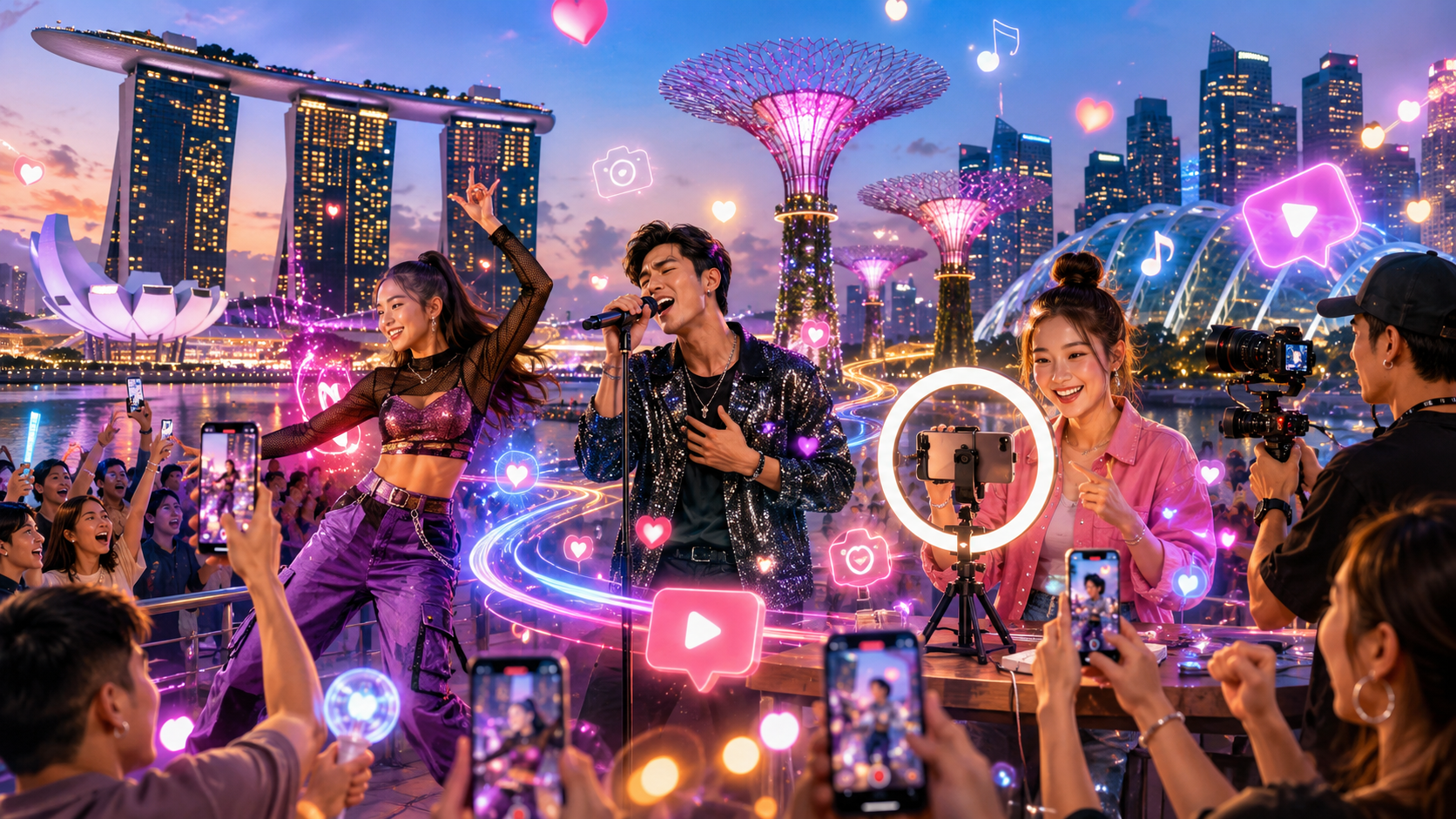
Digital creators are central to Singapore’s ambition to become Asia’s media hub. The presence of major global platforms enables creators to produce content for regional and global audiences. Short-form videos, interactive live streams, and branded digital series are now common products of Singapore’s creator economy. This sector attracts young talent, foreign investment, and advertising spending.
Data-Driven Policy and Future Outlook
Singapore’s creative industry strategy is increasingly data-driven. Government agencies track employment, exports, and digital revenue in real time. Policy adjustments are made quickly to address skill gaps, infrastructure needs, and international competition. As the creative sector becomes more integrated with technology and design, Singapore is well positioned to sustain long-term growth. The next phase will likely focus on deeper AI integration, stronger IP protection, and greater regional collaboration.