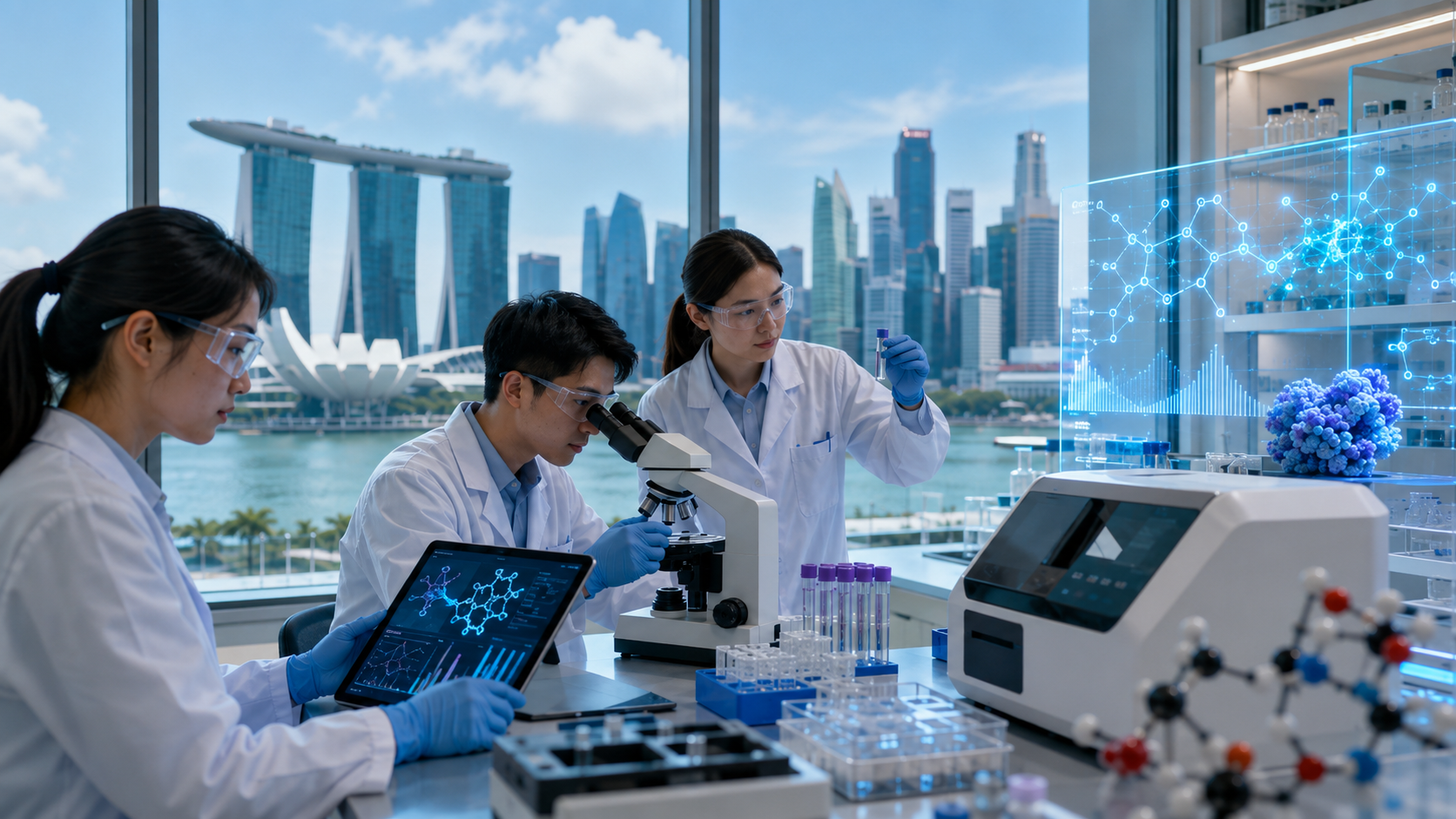
Singapore enters the second half of the decade with a mature scientific base but an unfinished biotechnology mission. The country has world-class research institutes, multinational pharmaceutical facilities, respected hospitals, and a strong regulatory system.
The central question for 2026–2030 is whether Singapore can convert more of these advantages into globally successful medicines, diagnostic products, and biotechnology companies.
This transition requires a shift from supporting research activity to building sustainable commercial outcomes.
Research Funding Created a Strong Foundation
Singapore’s Research, Innovation and Enterprise 2025 plan committed S$25 billion to national research and innovation priorities for the 2021–2025 period. The official strategy is documented by the National Research Foundation Singapore.
Health and biomedical sciences were major components of the wider innovation agenda. Funding supported universities, public research institutions, talent development, technology translation, and partnerships with industry.
As the country moves beyond the RIE2025 period, policymakers will face pressure to demonstrate measurable results, including new companies, licensed technologies, clinical programs, skilled jobs, and international revenue.
Artificial Intelligence Changes Early Drug Development
Discovering a new medicine is expensive and uncertain. Researchers may evaluate thousands of compounds before identifying a candidate suitable for clinical testing.
Artificial intelligence can help analyze molecular structures, predict interactions with biological targets, and identify possible safety problems earlier. Singapore’s capabilities in computing, biomedical science, and data management make AI-assisted drug discovery a natural growth area.
The technology should not be viewed as a replacement for laboratory science. AI predictions still require experimental validation, animal studies where appropriate, and carefully designed clinical trials.
Startups Need More Than Research Grants
Singapore has created incubators, venture programs, and technology-transfer offices to encourage biotechnology entrepreneurship. Yet many startups face a difficult period between an academic discovery and a commercially investable product.
This stage may require toxicology studies, manufacturing development, patent protection, regulatory planning, and early clinical evidence. Costs rise rapidly while revenue remains uncertain.
Local investors may be more familiar with software businesses, which can often grow faster and require less capital. Biotechnology companies therefore need access to specialized investors who understand scientific risk and long development timelines.
A Realistic Route Through International Partnerships
Singaporean startups do not always need to build global sales organizations independently. Licensing agreements, co-development partnerships, and acquisitions can provide access to larger pharmaceutical companies with established clinical and commercial networks.
The challenge is negotiating those partnerships without giving away valuable intellectual property too early. Stronger management teams and experienced biotechnology executives can help founders make better decisions.
Regional collaboration is equally important. Singapore can contribute research quality, financing, and regulation, while neighboring countries provide larger patient populations, manufacturing options, or disease-specific knowledge.
The Most Promising Areas for the Next Decade
Precision medicine, cancer diagnostics, infectious-disease platforms, cell therapy, synthetic biology, and AI-supported drug discovery are likely to remain strategic areas.
Singapore may also become more important in healthy-aging research as Asian populations grow older. Technologies that detect disease earlier, reduce hospital admissions, or help patients manage chronic conditions could have significant medical and economic value.
The decisive issue will be commercialization. Singapore already knows how to build research institutions and attract multinational investment. Its next achievement must be creating more biotechnology products and companies that originate locally, solve major healthcare problems, and compete internationally.
Between 2026 and 2030, the country’s biotechnology industry will be judged not only by how much research it funds, but by how effectively its science reaches patients.