Clarke Quay After the Club Boom
On a Wednesday evening in June 2026, Clarke Quay’s busiest venue was not a club or a bar. It was the FairPrice Finest supermarket, with its buzzy Grocer Bar and food hall drawing a steady crowd. That single detail captures the scale of the precinct’s reinvention. Clarke Quay still has bars and clubs, but it now shares its waterfront with a music retailer, an indoor dog pool, gyms and pet-friendly restaurants. The area is no longer organised exclusively around late-night revelry. It is becoming a mixed-use neighbourhood that happens to have a nightlife component — a subtle but consequential distinction.
The Data Behind the Shift
The shift is not anecdotal. Between August 2025 and June 2026, the Urban Redevelopment Authority approved 37 applications for new nightlife uses in the Boat Quay historic district, while police approved 92 applications to extend liquor trading hours within the pilot zone. Footfall in the Singapore River precinct rose by about 10 per cent on average during the pilot. At the same time, visitor arrivals fell from 1.43 million in March 2026 to 1.24 million in May 2026, underscoring the volatility that precinct operators must navigate. The policy response — formalising loosened nightlife rules after a year-long pilot — signals that the state sees diversified, experience-led precincts as part of the solution, not the problem.
Mixed-Use as a Survival Strategy
Zouk’s reopening in June 2026 illustrates how a single anchor venue can adapt to this new geography. Its revamped complex now includes Rally Clubhouse, a day-to-night social space, alongside the club venues. The precinct’s broader evolution is driven by the same logic: spread revenue across more hours, more use cases and more audiences. A dog pool, a gym and a supermarket may seem unrelated to nightlife, but they all generate foot traffic that a club alone cannot produce during the day. In an environment where CNA TODAY observed noticeably subdued weekday evenings in Clarke Quay, that daytime and early-evening activity is not incidental. It is the economic base that supports the night.
What a Nightlife Precinct Looks Like in 2026
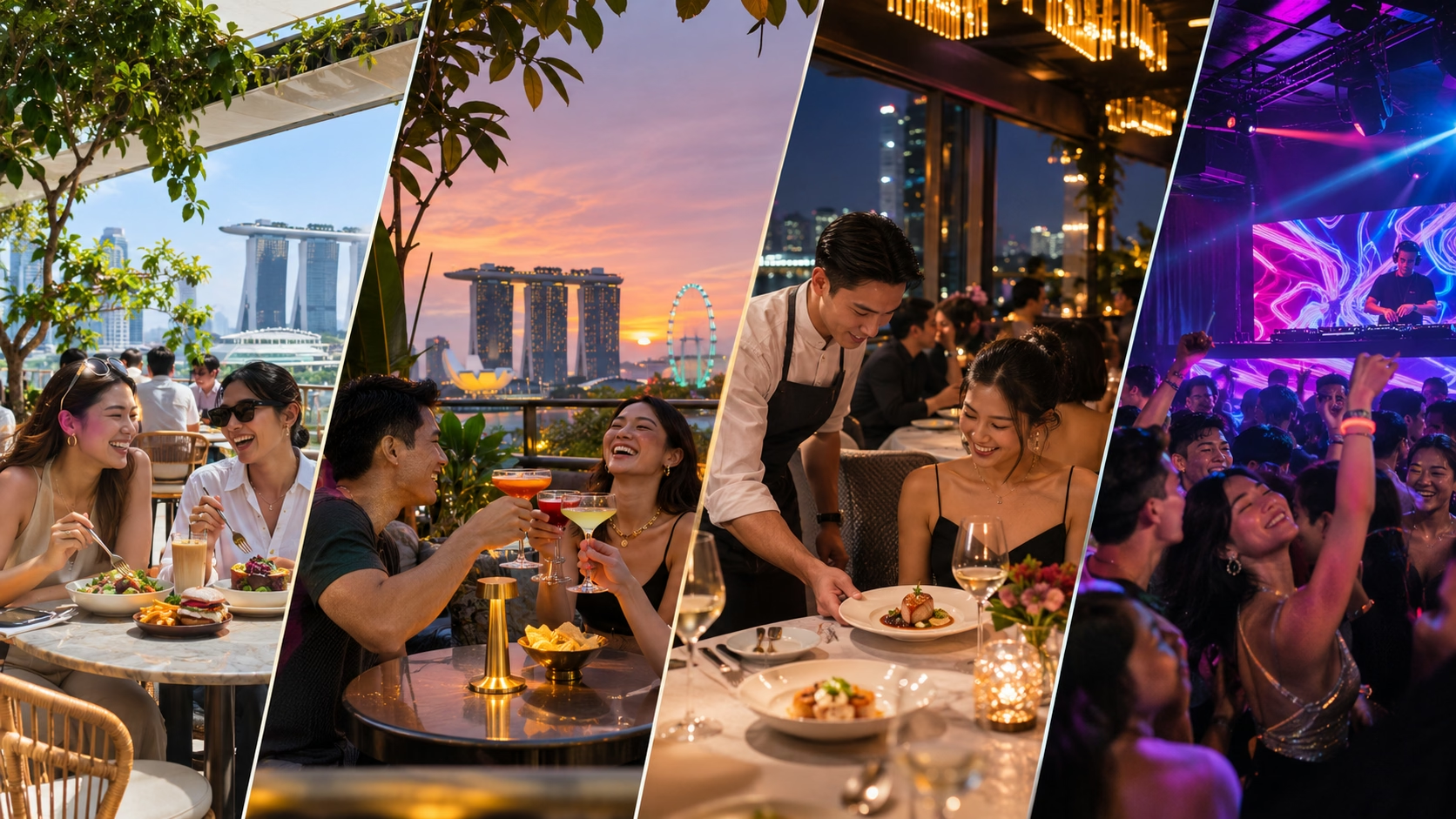
The Singapore River precinct is not trying to recreate the pre-pandemic club belt. It is trying to build something more resilient: a district where a resident can swim their dogs, buy groceries, have dinner and stay for a drink, and where a visitor can move from a gallery-adjacent rooftop to a listening bar without crossing the city. The nightlife is embedded in a wider lifestyle ecosystem rather than isolated within it. Whether that model can sustain the spectacle and energy that made Clarke Quay globally recognisable remains an open question. But the direction of travel is clear: the future of the Singapore night out is less a single venue and more a walkable, mixed-use environment designed for multiple reasons to stay out.