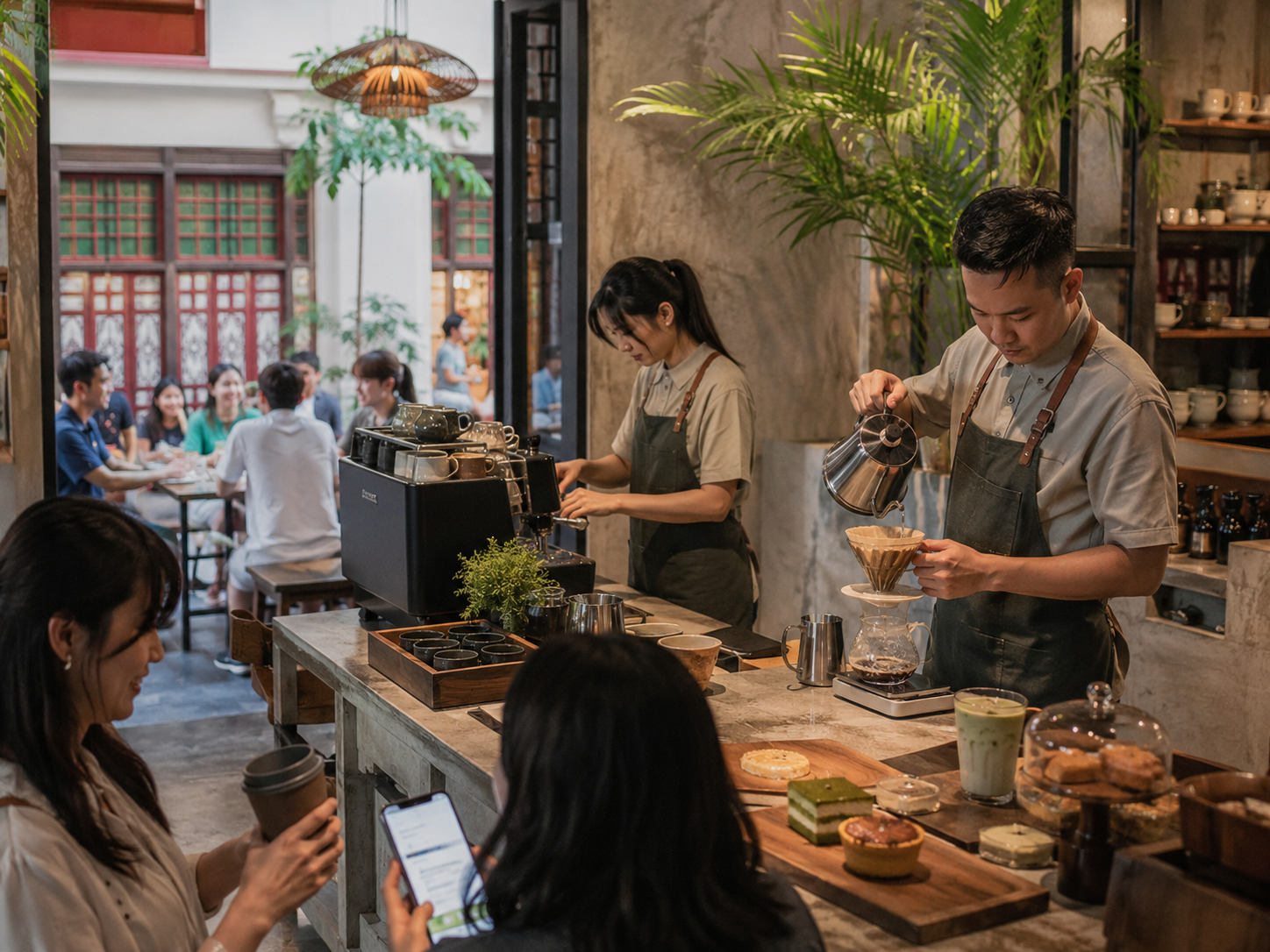
Singapore’s café industry has developed into one of the most dynamic segments of the country’s food and beverage sector. What was once primarily associated with traditional kopitiams and everyday coffee consumption has expanded into a diverse market featuring specialty coffee shops, lifestyle cafés, boutique roasters, and technology-driven beverage businesses.
The current café landscape reflects a broader change in consumer expectations. Customers are increasingly looking for quality, convenience, unique experiences, and meaningful connections with brands. This transformation has encouraged local café entrepreneurs to rethink traditional business approaches and develop strategies that go beyond selling coffee.
In 2026, Singapore’s café sector is increasingly shaped by businesses that understand customer lifestyles and adapt quickly to market changes. The ability to combine product excellence with innovative experiences has become a key factor separating successful cafés from competitors.
Local Coffee Brands Build Stronger Identity Through Storytelling
One of the most important developments in Singapore’s café market is the growth of locally developed coffee brands. Independent operators are competing by creating strong identities based on craftsmanship, authenticity, and cultural relevance.
Unlike large international coffee chains that often rely on standardized experiences, local cafés have the advantage of creating personalized connections with customers. Many highlight their roasting philosophy, relationships with coffee farmers, sustainability initiatives, or Singapore-inspired menu concepts.
For example, some local cafés incorporate regional flavors such as gula melaka, pandan, and traditional desserts into modern coffee creations. These approaches allow businesses to celebrate Singapore’s culinary heritage while appealing to younger consumers who enjoy innovative products.
Brand storytelling has also become a powerful marketing tool. Customers increasingly want to understand the background of the businesses they support, including where ingredients come from and what values the company represents.
New Business Models Help Cafés Adapt to Economic Challenges
Running a café in Singapore requires careful financial management due to high operational costs and intense competition. Many entrepreneurs are exploring alternative revenue streams to strengthen business sustainability.
Beyond dine-in services, cafés are expanding into packaged coffee sales, online subscriptions, corporate coffee solutions, workshops, and e-commerce platforms. These additional channels help businesses generate income while maintaining customer relationships outside physical locations.
According to Singapore’s official business statistics from the Singapore Department of Statistics, the food and beverage services industry continues to represent an important part of the domestic services sector. Industry data can be accessed through:
https://www.singstat.gov.sg/
The ability to diversify revenue has become especially important as cafés face unpredictable consumer spending patterns and changing economic conditions.
Sustainability and Ethical Coffee Become Key Market Factors
Environmental awareness is increasingly influencing purchasing decisions in Singapore. Modern café customers are paying more attention to sustainable practices, including responsible coffee sourcing, reduced packaging waste, and environmentally friendly operations.
Many cafés are responding by introducing reusable cup programs, recyclable packaging, and partnerships with ethical coffee suppliers. These initiatives help businesses strengthen their reputation while meeting growing consumer expectations.
Sustainability is no longer viewed only as a corporate responsibility. For many café owners, it has become part of their competitive strategy and brand positioning.
Technology Shapes the Next Generation of Café Experiences
Technology will continue playing an important role in the development of Singapore’s café industry. Digital ordering systems, artificial intelligence-based recommendations, automated equipment, and customer data analysis are expected to influence how cafés operate in the future.
However, technology is unlikely to replace the personal interaction that defines successful cafés. Customers continue to value human connection, skilled baristas, and welcoming environments.
The strongest businesses will likely be those that combine technological efficiency with authentic customer experiences.