The Counter-Current
The dominant narrative of fashion slop is one of inevitability: algorithms get smarter, production gets faster, and consumers get more of the same. But in Singapore, a counter-current is forming. It is not loud or particularly well-funded, but it is visible in the city’s independent boutiques, in the growing appetite for secondhand and vintage, and in the quiet refusal of some designers to let data dictate their creative decisions.
The Singapore Fashion Council’s launch of the Sustainability Readiness Intelligence framework in 2026 signals institutional awareness that the current trajectory is untenable. The framework aims to help companies assess sustainability readiness and navigate standards—but it also implicitly acknowledges that the algorithm-first model has externalities that the market alone will not correct.
The Human Stylist Strikes Back
On the consumer side, there are signs of fatigue with algorithmic recommendation. Vogue’s 2026 fashion-tech predictions noted that brands are bifurcating in their approach to AI: some reject it entirely, while others lean into its surreal, glitchy aesthetic as a marketing novelty. Trend forecaster Shaun Singh predicted that eventually, “the same glitchy language that feels provocative now will start to feel interchangeable,” and brands will return to “human craft, imperfection, and tactility” as differentiators.
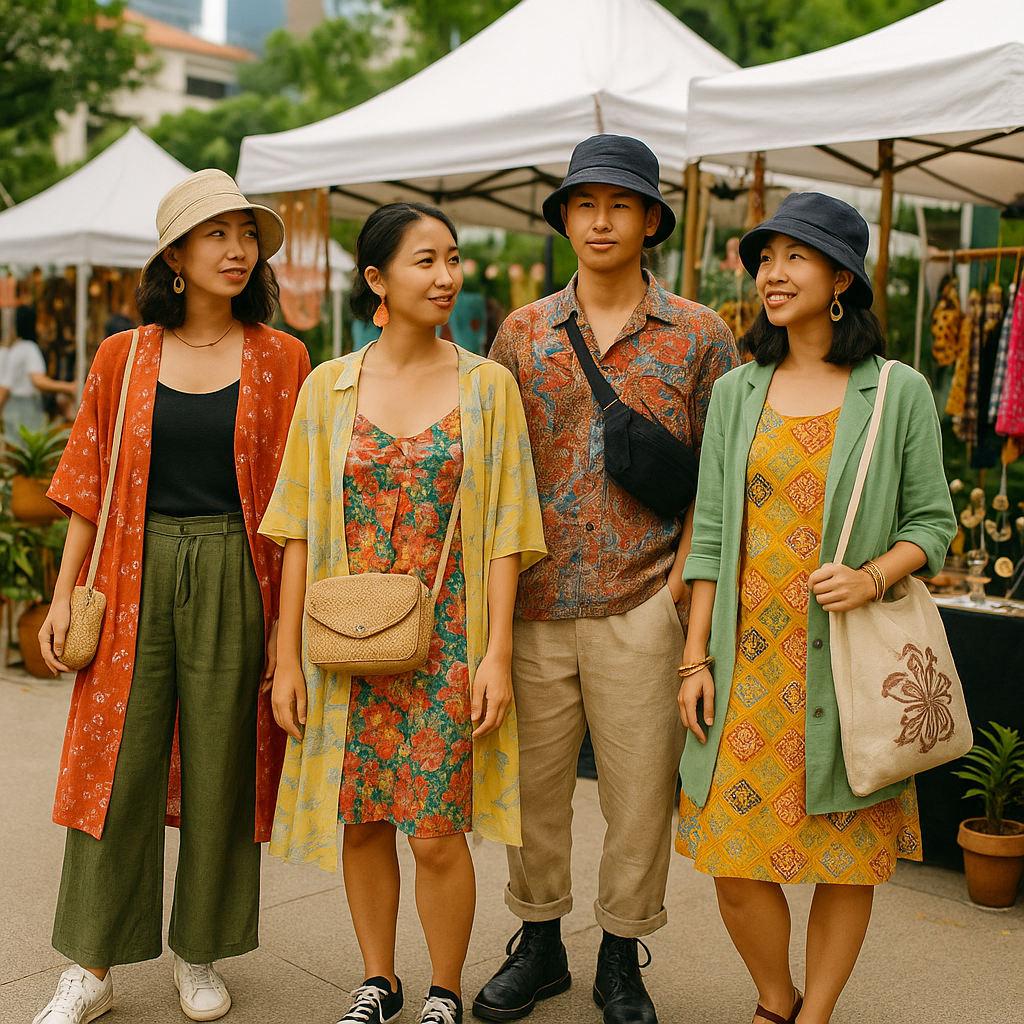
This shift is already perceptible in Singapore’s thrift and consignment scene, where shoppers hunt for pieces that the algorithm cannot replicate: a 1990s Singaporean label, a hand-dyed batik jacket, a pair of shoes worn in by someone else’s life. These garments carry histories and imperfections that no data pipeline can generate. They are, by definition, not slop.
What Local Designers Need to Survive
The structural challenge for Singaporean independent designers remains formidable. Algorithmic fast fashion enjoys advantages of scale, data, and speed that no small label can match. But the conversation around fashion slop has created an opening: a growing vocabulary for critiquing homogeneity, and a growing consumer awareness that the “hot” item on their feed may have been designed by a spreadsheet rather than a person.
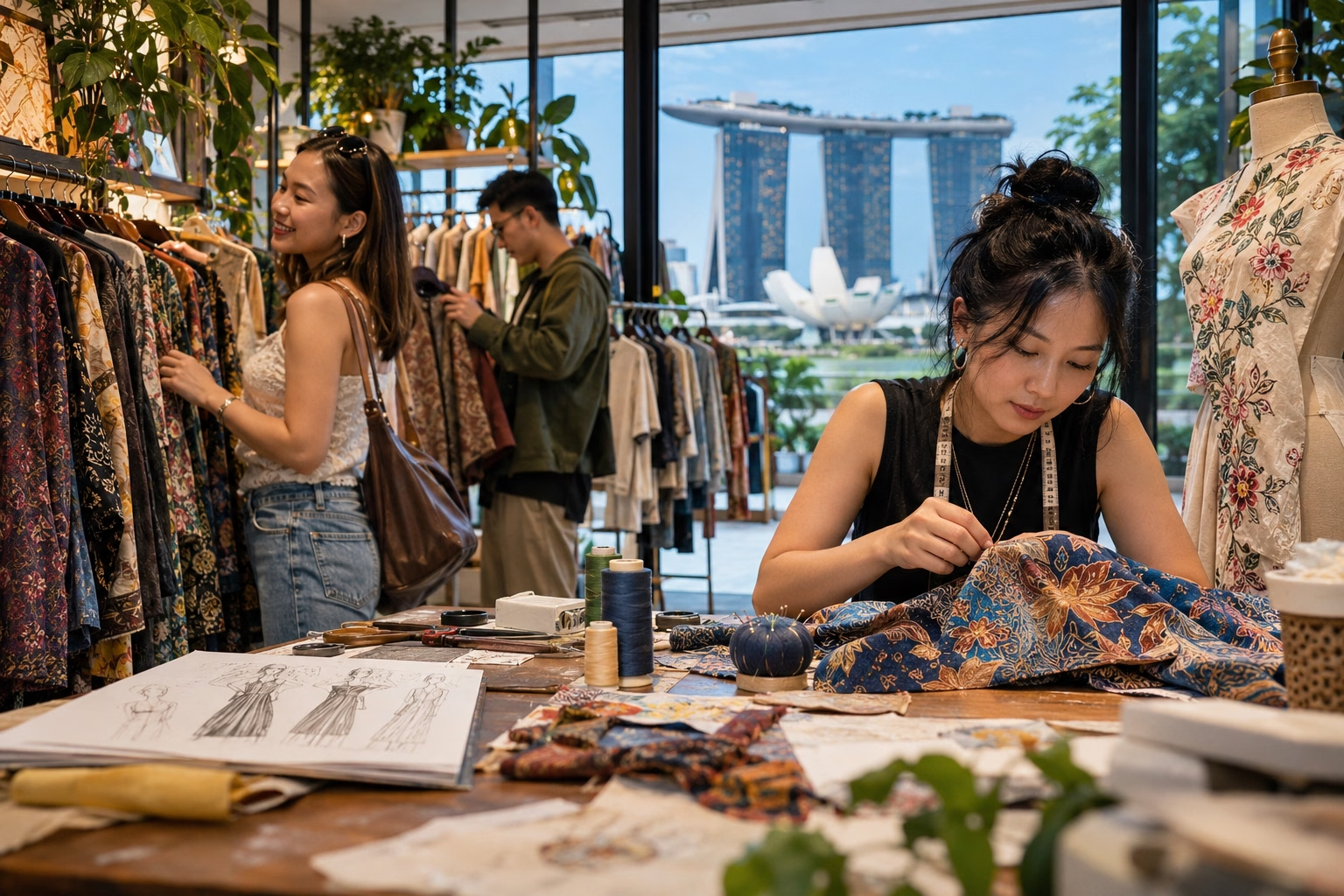
For local designers, the path forward may not be competing on trend cycles but on something the algorithm cannot commodify: rootedness. Clothing that engages with Singapore’s material culture, its climate, its hybrid aesthetic traditions, and its specific ways of living in the world. The algorithm can copy a silhouette. It struggles to copy a sense of place.