Beyond Promotion
Singapore’s approach to the fan economy is distinguished by the depth of state involvement. The Singapore Tourism Board does not merely market the city as a concert destination; it actively participates in securing and facilitating major events through funding, logistical support, and in some cases, exclusive arrangements.
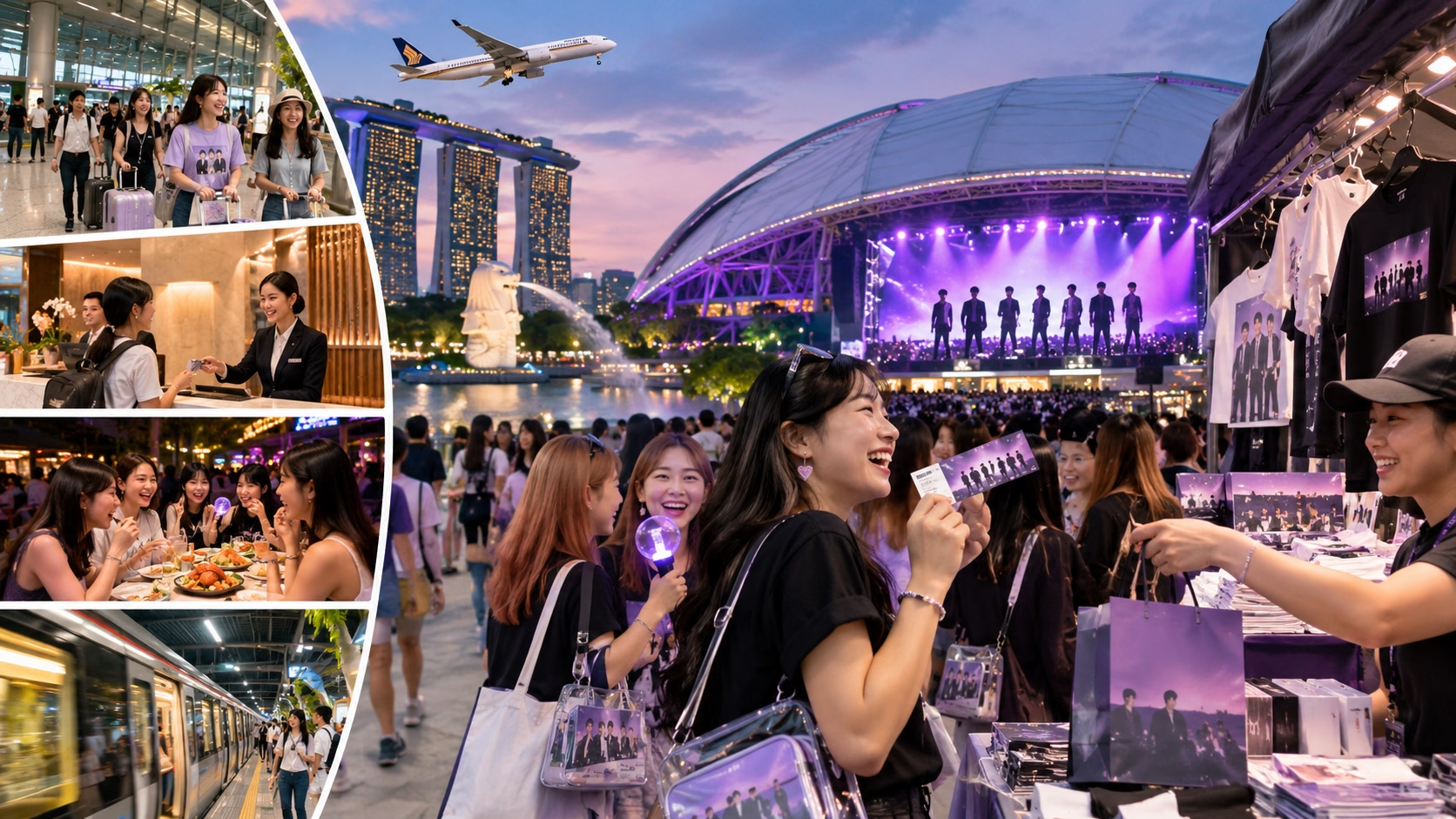
The most discussed example remains Taylor Swift’s Eras Tour in March 2024, which Singapore secured as the only Southeast Asian stop. Reports indicated that the government directly supported the deal in exchange for exclusivity, resulting in approximately 70 percent of the audience arriving from overseas . The economic effect was substantial: hotel occupancy rates rose by 30 percent, particularly at properties like Marina Bay Sands, and the concert generated a tourism spending boost that rippled across the region .
The Infrastructure of Attraction
The institutional machinery behind these outcomes includes a one-stop service for foreign event organisers that streamlines logistics and reduces bureaucratic friction, alongside world-class venues including the 55,000-seat National Stadium . The Singapore Tourism Board also collaborates with promoters and cultural institutions to curate a diverse lineup that appeals to both local communities and international visitors, from K-pop to Cantonese opera and Indian folk performances .
The Domestic Complement: SG Culture Pass
State involvement extends beyond attracting foreign artists. The SG Culture Pass, administered by the Ministry of Culture, Community and Youth, provides Singapore citizens aged 18 and above with S$100 in credits for local arts, heritage, and cultural programmes . As of January 2026, more than 1.1 million Singaporeans had registered, over 136,000 had used credits, and total spending exceeded S$9.8 million, with roughly half of users aged 18 to 35 .
The pass serves a dual purpose: it lowers the cost barrier for citizens to participate in cultural life while creating a guaranteed audience base for local arts organisations. It also demonstrates that Singapore’s cultural policy is not solely oriented toward headline-grabbing international acts but includes a domestic infrastructure for cultural participation.
The Regional Friction
Singapore’s exclusive deal-making has not been without controversy. The Taylor Swift arrangement prompted questions from neighbouring countries about equitable access to major events, and the government subsequently emphasised that such deals are not hostile acts but part of a competitive tourism strategy . The tension is structural: exclusivity creates economic advantage for Singapore while potentially limiting regional fans’ access to artists they follow.
For the fan economy, the state’s role introduces a layer of strategic intentionality that pure market dynamics would not produce. Concerts become instruments of tourism policy, cultural participation becomes a subsidised public good, and the fan’s spending becomes a measurable input into national economic planning. Whether this model is sustainable as regional competition intensifies is a question that will be answered in the booking data of every subsequent tour announcement.