Euphoria without ethanol: the deliberate craft of sober partying
A common misconception about alcohol-free parties is that they are simply conventional parties with the alcohol removed. The reality in Singapore is more designed than that. Organisers are intentionally building sensory and social environments that produce energy, connection, and release without relying on intoxication. The result is a different kind of high—one that is architectural, programmed, and curated.
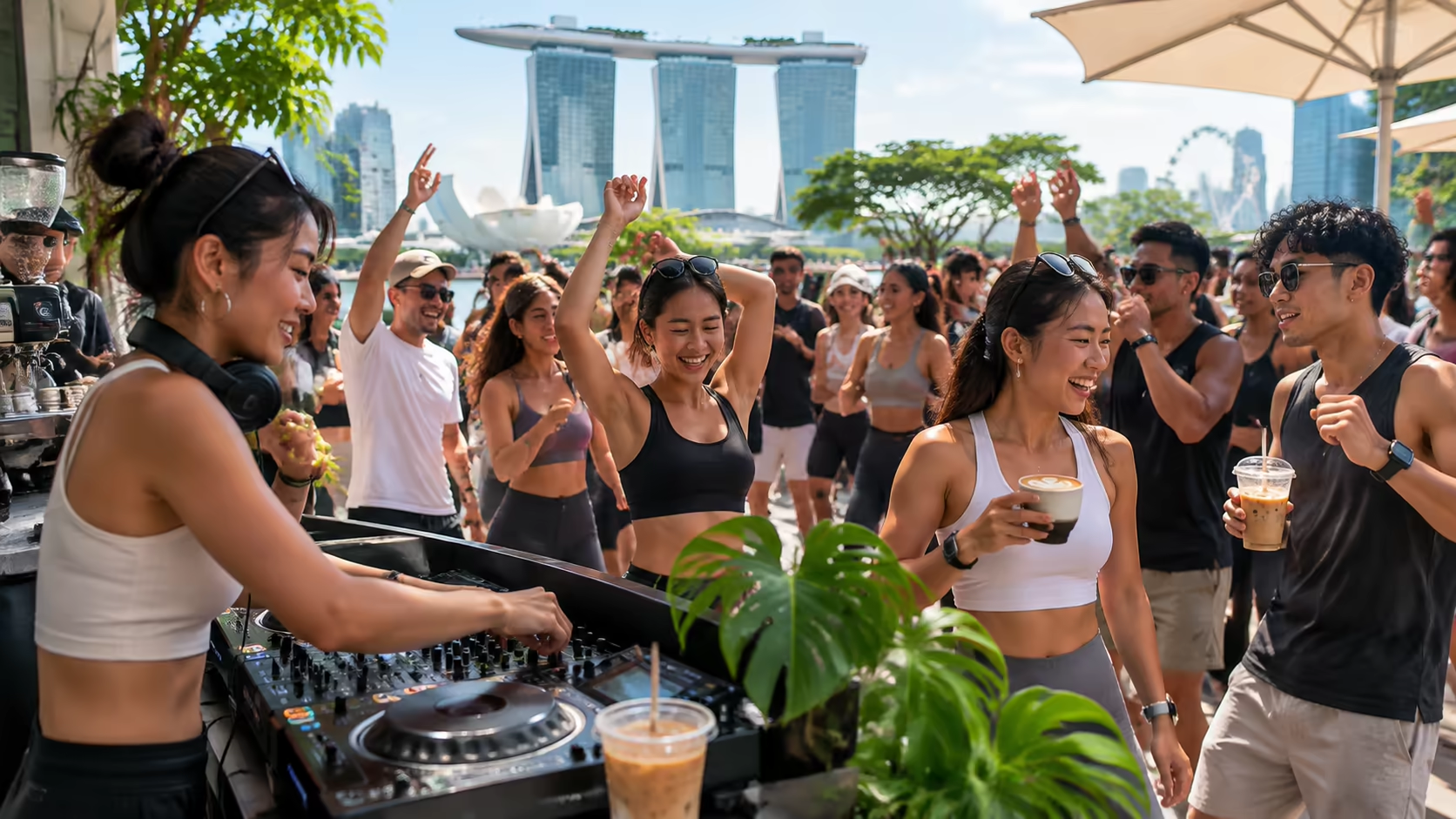
At Beans&Beats’ dim sum-meets-techno event, the sensory contrast was the point: steaming baskets of siu mai and har gow circulated through a crowd dancing to pop remixes, Chinese theme songs, and Fred again.. tracks, with specialty coffee replacing vodka sodas. The volume was loud enough to turn heads on the street outside—noise in broad daylight is uncommon in Singapore, and that disruption itself became part of the event’s identity.
The beverage programme as a design language
In sober clubbing, what you drink is not a sideshow; it is a signal of intentionality. Events feature cold brew stations, curated matcha bars, mocktails, and caffeine-fuelled movement. The Breakfast Club includes a specialty coffee or matcha on arrival with every ticket, positioning the drink as part of the entry ritual rather than an upsell. AsiaOne’s reviewer describes handcrafted matcha-based drinks from a local business while dancing to Korean R&B—a pairing that would be incongruous in a traditional club but feels coherent in the sober format.
This beverage design does more than replace alcohol. It changes the tempo of consumption. Coffee and matcha are sipped, not shot; they extend the social window and reduce the binge-and-crash rhythm of nightlife. The crowd that results is, in the words of one observer, “alert, present, and surprisingly more social” than a typical club audience.
Social architecture: from crowded anonymity to intentional connection
The spatial and social design of daytime parties also differs. The Breakfast Club’s January 2026 edition included a “Word of the Year” keychain-making booth and a “Make Your Own NY26 Charms” station—low-stakes creative activities that give attendees something to do with their hands and a reason to talk to strangers before the dance floor fills. At the wellness end of the spectrum, ice baths, saunas, and sound baths create structured intimacy that nightclubs rarely achieve.
Organiser Tricia Fok describes the goal as “meaningful connections” rather than the “more drinking” dynamic of the night scene. This is not anti-alcohol moralising; it is a design choice about what kind of sociality the event is built to produce.
The temporal design: morning, afternoon, and the end of FOMO
Time itself is a design material. Morning raves ending at 1 p.m., afternoon coffee clubbings ending at 7 p.m., and wellness events starting at 8:30 a.m. on time all signal a different relationship to leisure. The “fear of missing out” that keeps people in clubs until 4 a.m. is replaced by a finite, bounded experience—one that participants describe as leaving them energised rather than depleted.
Vogue Singapore’s June 2026 feature documents the mainstreaming of this design logic, noting that sober parties with matcha, hot pilates, and sound baths are “steadily reshaping Singapore’s social scene,” with wellness rituals functioning as social infrastructure rather than private routines.