The Traditional Path Is No Longer Enough
For much of Singapore’s media history, the career trajectory for aspiring artists followed a predictable arc: audition, secure a Mediacorp contract, build a local fanbase, and gradually accumulate roles. In 2026, that playbook has been fundamentally rewritten. Singaporean artists are pursuing cross-border opportunities, developing digital-first personal brands, and acquiring skills that extend far beyond traditional performance.
The Cross-Border Breakthrough Model
Actor Ayden Sng’s 2026 trajectory illustrates the potential of international market entry. After gaining regional recognition, he made history with a role in the Chinese web drama Double Helix, subsequently departing Mediacorp’s The Celebrity Agency to sign with Chinese agency Major Entertainment.
Sng’s move reflects a broader recognition that Singapore’s domestic market—while sophisticated—is small. Artists seeking substantial career growth increasingly view regional and international markets not as optional extensions but as essential development arenas.
Mediacorp has responded by facilitating such transitions. A partnership with Taiwan’s Chelsea Entertainment aims to expand the regional careers of actors Richie Koh and Tyler Ten, demonstrating that even traditional agencies now recognise the necessity of cross-border strategies.
Digital Platforms as Career Infrastructure
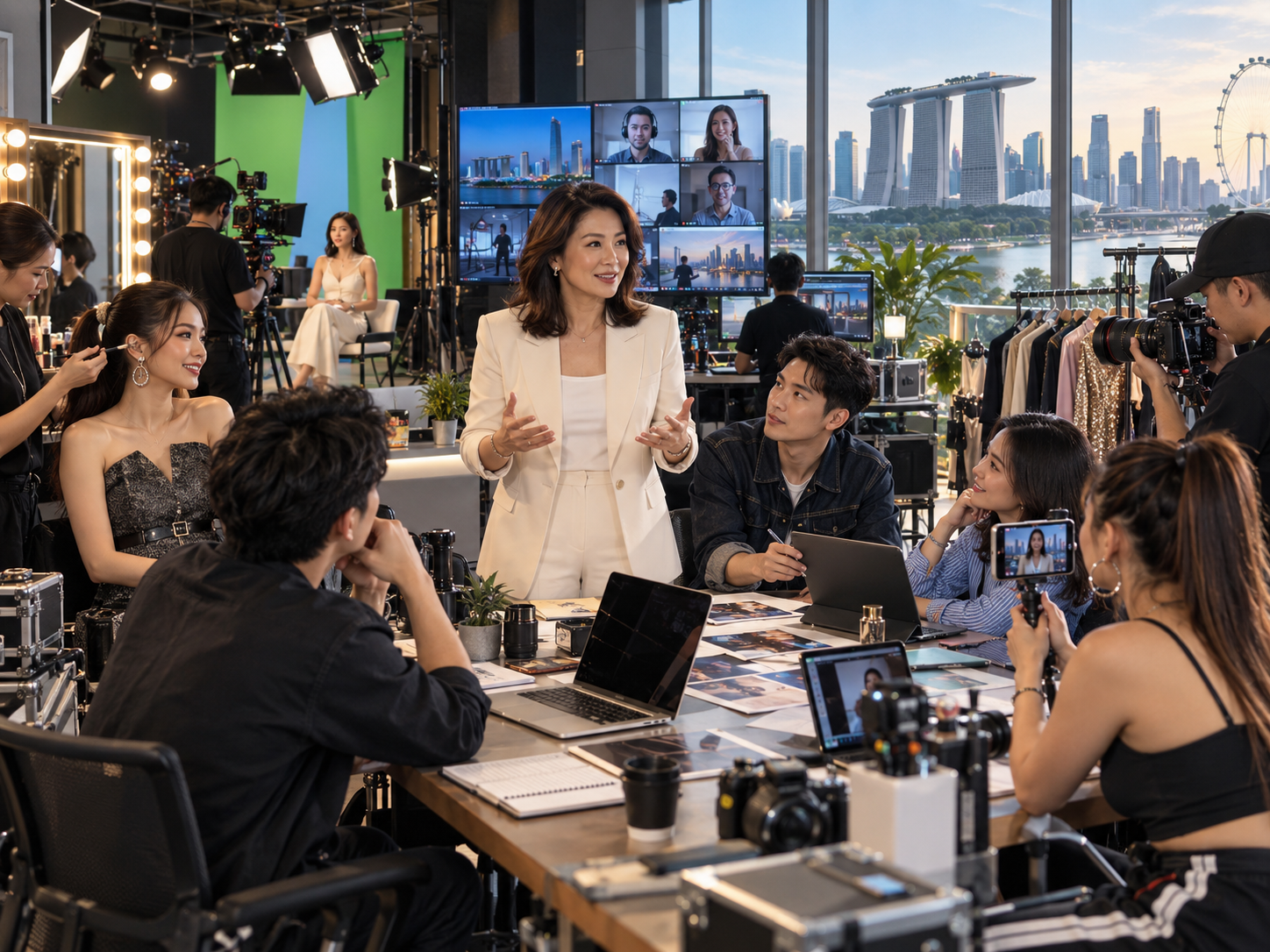
Singaporean actors are increasingly building careers that operate across platforms simultaneously. Actor Zong Zijie, reflecting on industry shifts, noted that he is focusing on livestreaming commerce and behind-the-scenes production while maintaining his acting career. His perspective—viewing industry changes not as threats but as catalysts for diversification—represents a generational shift in how Singaporean artists approach career sustainability.
This diversification is not merely defensive. Digital platforms offer direct audience engagement, immediate feedback, and monetisation opportunities that traditional media cannot match. For artists willing to embrace these channels, career development becomes a multi-stream enterprise rather than a single-track pursuit.
The AI Skills Imperative
The integration of AI into content production is reshaping skill requirements across the industry. MDDI’s 2026 response to parliamentary questions acknowledged that “AI offers opportunities for artists and content providers to experiment with new storytelling formats, lower production costs, and reach new audiences”.
For Singaporean artists, this means that AI literacy—understanding how to leverage generative tools for content creation, post-production, and audience analysis—is transitioning from optional to essential. IMDA’s Talent Accelerator Programme explicitly aims to ensure media professionals “remain relevant and competitive” amid AI-driven disruption.
The Education-to-Career Pipeline
Singapore’s talent development infrastructure is expanding to support these evolving career requirements. SM Entertainment’s Singapore academy, opened in January 2026, offers over 70 programmes training more than 600 students from over 10 countries. The MADD Group’s expansion into artiste development through MADD Entertainment creates pathways from performing arts education into professional careers.
These programmes increasingly recognise that modern celebrity careers require more than performance skills. Media training, content creation, brand management, and entrepreneurial thinking are becoming integral components of artist development.
Fairness and Transparency as Career Foundations
Career development in Singapore’s celebrity industry is also being shaped by growing attention to fair treatment. In May 2026, the National Trades Union Congress and trade associations called for “fairer and more transparent collaboration practices” to protect performing artists and creative freelancers from issues including unsigned contracts and payment delays.
For artists, these advocacy efforts matter because career development cannot be sustained without basic professional protections. The shift toward written contracts, transparent payment terms, and dispute resolution mechanisms creates a more stable foundation upon which artists can build long-term careers.
What the New Playbook Requires
Singaporean artists building careers in 2026 operate in an environment that demands adaptability. The successful artist profile increasingly combines traditional performance excellence with digital fluency, international market awareness, entrepreneurial initiative, and engagement with industry support structures like TAP and union advocacy.
The artists who thrive will be those who view career development not as something managed by an agency but as an ongoing strategic project that they actively shape—leveraging every available resource, platform, and opportunity in an increasingly interconnected regional entertainment ecosystem.