When Utility Meets Fandom
Streetwear has always been about more than clothes. It is about identity, community, and the codes that signal belonging. In Singapore, those codes are increasingly written in Korean. The K-pop streetwear wave has transformed how young Singaporeans dress, moving beyond simple fan merchandise to a sophisticated aesthetic that blends athletic utility with idol-inspired flair.
UNIQLO’s BABYMONSTER Moment
The mainstreaming of K-pop streetwear reached a new milestone in February 2026 when UNIQLO launched its first-ever UT collaboration with girl group BABYMONSTER in Singapore. The collection—six women’s graphic T-shirts priced at S$19.90 each—translated the group’s “BATTER UP” energy into wearable, everyday pieces with relaxed boxy silhouettes.
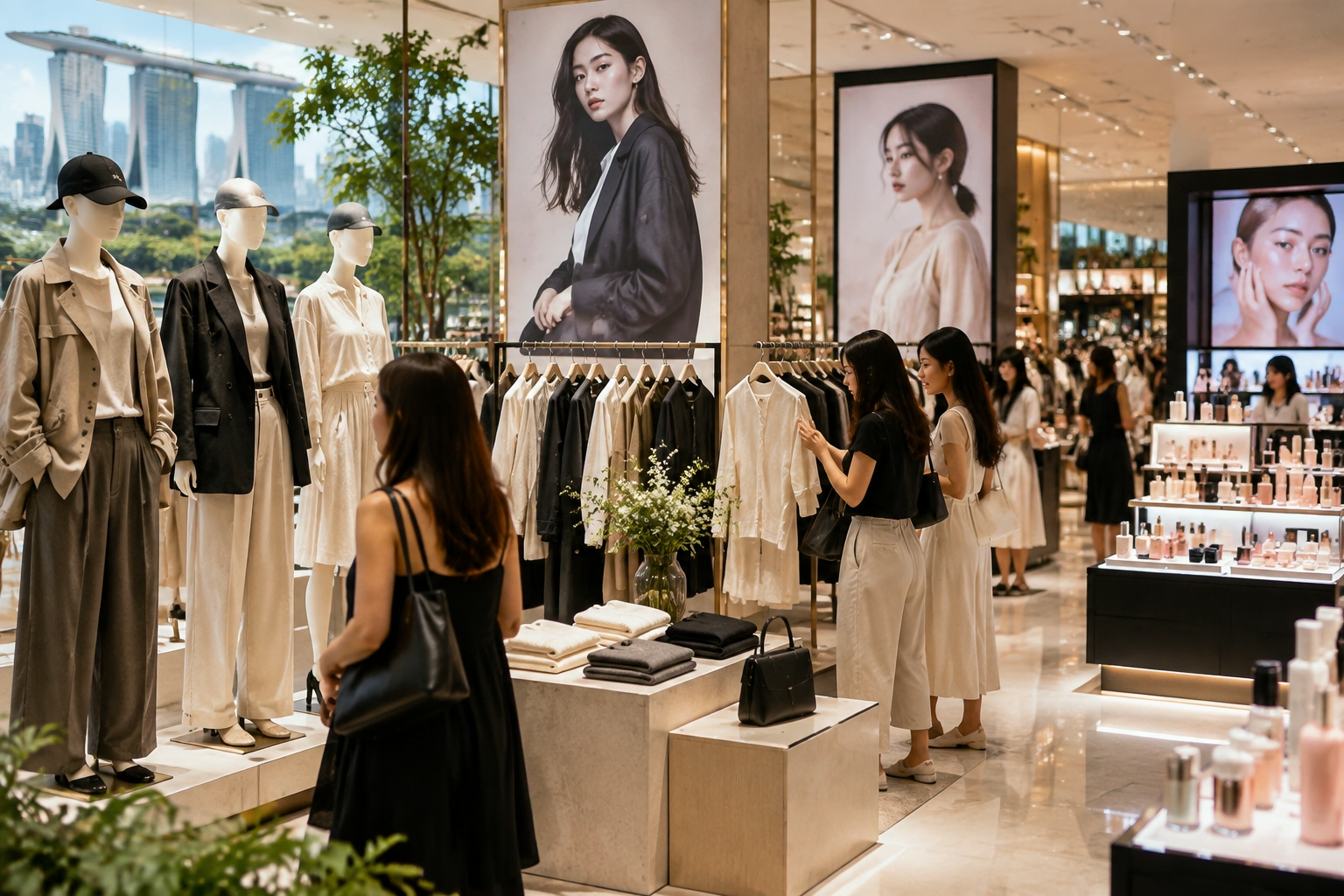
What made this collaboration notable was not the price point but the accessibility. Available at all UNIQLO outlets islandwide and online, the BABYMONSTER UT collection democratized K-pop fashion in a way that luxury collaborations cannot. The inclusion of a limited photo card set with each purchase added a collectible dimension that appealed to both fashion consumers and fandom participants.
The Streetwear Aesthetic in Singapore’s Climate
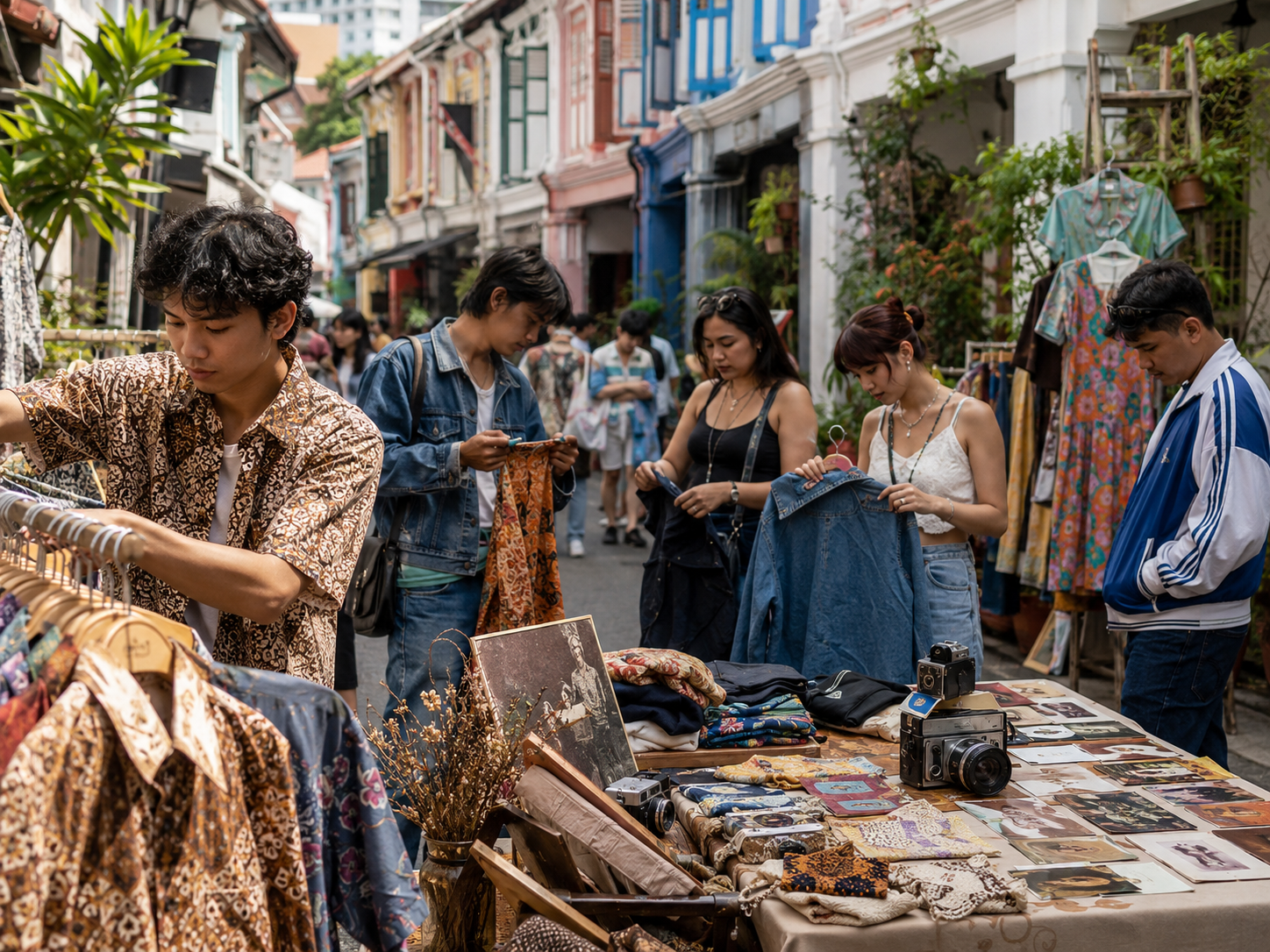
Singapore’s tropical climate has shaped a distinct interpretation of K-pop streetwear. As one fashion analysis noted, “In Singapore, where humid days demand breathable yet stylish outfits, girls are embracing the K-pop streetwear wave”—airy tank tops, statement accessories, and mix-and-match layers designed for “Orchard Road strolls or café-hopping in Tiong Bahru”.
This adaptation is significant because it demonstrates that K-pop fashion is not a monolithic import. It is being localized, adjusted to suit Singapore’s environment and lifestyle. The oversized hoodies and heavy layering that characterize Korean street style in Seoul’s colder months give way to lighter fabrics, more strategic layering, and accessories that carry the aesthetic without the thermal burden.
Adidas, Jennie, and the Collaboration Economy
The adidas Originals by JENNIE collection, which arrived in Singapore stores in September 2026, represents the apex of the K-pop streetwear collaboration model. As the first Asian artist to have a personally designed product line with adidas, Jennie’s collection positioned her as more than a muse—she was a creative partner.
The collection’s Superstar Square Ballet sneaker exemplifies how K-pop collaborations can push design boundaries. By combining ballet’s delicate aesthetics with streetwear’s structural confidence, the shoe created a new category—one that appealed to consumers who wanted something neither purely athletic nor purely decorative. The clothing line extended this philosophy, offering “tight short skirts, knitted cardigans, sheer sleeveless bodysuits” that could be mixed and matched across contexts.
Beyond the Merch Table
The maturation of K-pop streetwear in Singapore is evident in the shift from merchandise to fashion. Early K-pop apparel was largely functional—a T-shirt with a group’s logo served as a fan signal. Today’s collaborations are designed as legitimate fashion pieces, created with the same attention to fit, material, and construction as any other contemporary collection. Consumers are not buying these items solely because they are fans; they are buying them because they are stylish.
This evolution has implications for the broader Singaporean fashion market. Local streetwear brands now compete not just with international labels but with K-pop collaborations that carry built-in cultural relevance. The challenge—and the opportunity—is to create pieces that can stand alongside these high-profile releases without relying on fandom as a crutch.