Paying for your morning kopi has become the most powerful data point in Singapore’s food economy. In 2026, the fusion of SGQR, digital wallets, and loyalty platforms has created a closed-loop ecosystem where every transaction teaches a business how to serve you better—and rewards you for coming back.
The MAS 2026 Payment Statistics
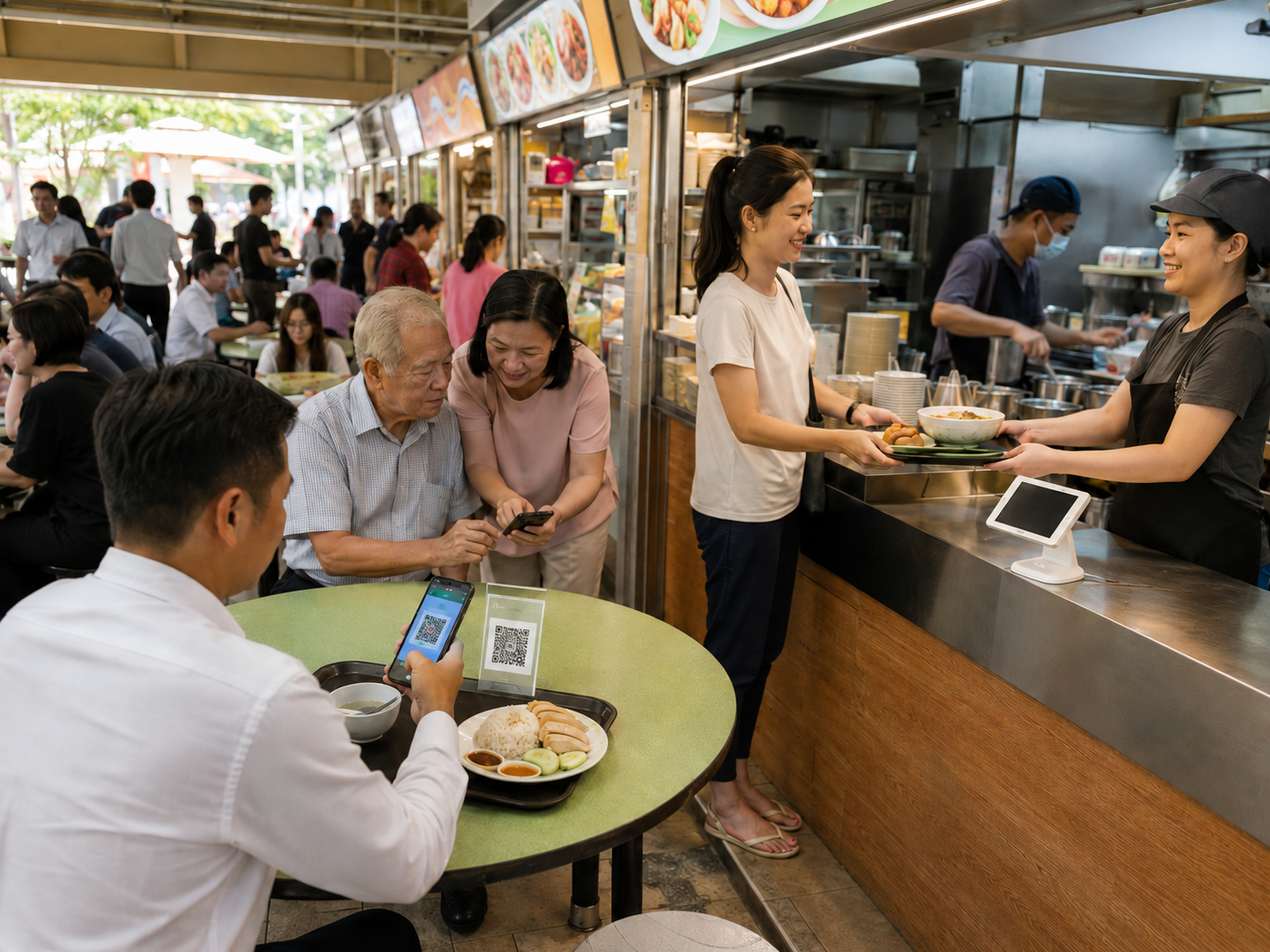
The Monetary Authority of Singapore’s latest data marks a milestone: 92% of all F&B transactions under S$50 are now cashless. SGQR, the national unified payment code, processes over S$1.2 billion in monthly food and beverage payments across hawker centres, cafes, and quick-service restaurants. The simplicity of a single code for PayLah!, PayNow, GrabPay, and major bank apps has all but eliminated the payment fragmentation that once frustrated merchants and consumers alike.
DBS PayLah! Hawker Meal Campaign
No single player has pushed cashless adoption at the ground level more visibly than DBS PayLah!. The bank’s “Hawker Meal” cashback programme, expanded in 2026, offers S$0.50 to S$2 instant rebates on every PayLah! transaction at over 12,000 hawker and coffee shop stalls. According to DBS, the campaign has driven a 45% increase in daily active users scanning at hawker stalls. For stallholders, the incentive is clear: higher footfall, zero cash-handling errors, and a digital trail that simplifies accounting. A bak chor mee stall in Bedok reported that 80% of its Saturday sales now come through PayLah!, thanks to the crowd drawn by cashback.
Loyalty That Learns
Digital wallets are no longer just payment tools; they are loyalty engines. Platforms like FavePay (integrated with Grab) and Burpple Beyond layer rewards onto the same SGQR scan. A customer paying with GrabPay at a participating café automatically earns points and unlocks a Burpple Beyond 1-for-1 dining deal for their next visit. This interoperability means small eateries can offer big-brand loyalty schemes without building their own app. Burpple’s 2026 internal data shows that member restaurants see a 35% higher visit frequency and a 22% lift in average spending per head when promotions are linked directly to the payment moment.
Personalisation Without the Creep
Behind the scenes, merchant POS systems are using anonymised transaction data to personalise offers. If data indicates a customer regularly buys a S$5.50 lunch set, the system might push a S$1 discount on an upgraded S$7.50 set via the payment app notification. Privacy safeguards mandated by the Personal Data Protection Commission ensure consent-based targeting, but opt-in rates are high because the value exchange is tangible. “It’s not an ad; it’s a discount I actually want,” explained a regular at a Raffles Place salad chain that boosted upgrade conversions by 28%.
The Road to a Cashless Hawker Culture
The final frontier is the small proportion of elderly hawkers and patrons who resist digital. MAS and the NEA have deployed over 500 “Silver Infocomm Ambassadors” to handhold seniors, while hawker associations organise group onboarding. The 92% cashless rate didn’t happen by chance—it’s the result of deliberate, inclusive design. In Singapore’s F&B landscape, the payment terminal has become a gateway to a smarter, more rewarding meal, where every dollar you spend teaches the system how to serve you better the next time.