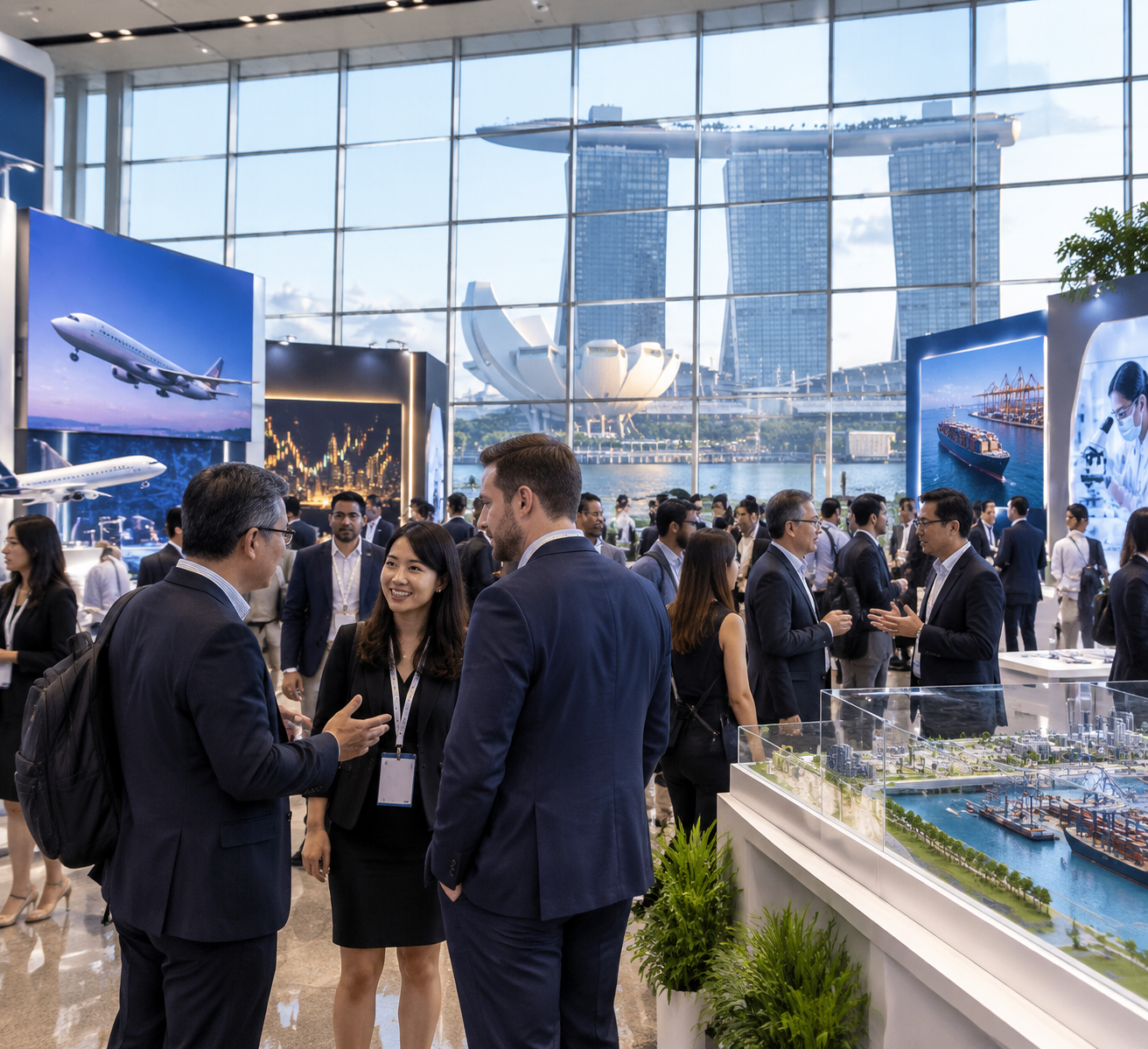
The strength of Singapore’s MICE sector is closely connected to the industries operating within the country. International events are more valuable when delegates can meet relevant regulators, investors, corporate buyers, researchers, suppliers, and professional associations in the destination itself.
Singapore offers this advantage across sectors such as financial services, aviation, technology, maritime trade, healthcare, hospitality, food, and advanced manufacturing. As a result, conferences and exhibitions can function as gateways into wider commercial ecosystems rather than isolated gatherings.
Financial Services and Technology Events
Singapore is a major financial center with a growing ecosystem of banks, insurers, payment companies, investors, regulators, and financial-technology businesses. This provides a strong foundation for conferences focused on digital payments, artificial intelligence, cybersecurity, investment, sustainable finance, and regulatory innovation.
The Singapore FinTech Festival illustrates how a business event can connect policy discussions with commercial partnerships and product demonstrations. Its official website, https://www.fintechfestival.sg/, provides information about the festival’s programs and participating ecosystem.
For international companies, attending a sector-focused event in Singapore can support market research, partnership development, investor discussions, and regional expansion.
Aviation and Aerospace Connections
Singapore’s position as an aviation hub supports events involving commercial airlines, aerospace engineering, airport technology, maintenance services, defense, and supply-chain management.
The Singapore Airshow is a prominent example. It brings together manufacturers, aviation professionals, government representatives, technology providers, and potential buyers. The event benefits from Singapore’s transport infrastructure, international accessibility, and established aviation sector.
Aviation conferences held in Singapore can also incorporate site visits, technical meetings, product demonstrations, and discussions with regional operators. This creates value beyond the formal conference agenda.
Food, Hospitality, and Consumer Industries
Singapore’s diverse culinary culture and role as a regional trade center make it a relevant location for food, hospitality, and consumer-product exhibitions. Events such as Food&HotelAsia connect producers, distributors, hotel operators, restaurant groups, equipment suppliers, and technology companies.
The destination’s hospitality sector also allows organizers to demonstrate products in realistic environments. Food-service equipment, hotel technology, payment systems, and sustainable packaging can be presented to professional buyers who operate across Asian markets.
Networking dinners and culinary programs can reinforce the event theme while giving international delegates a direct experience of Singapore’s food culture.
Maritime Trade, Logistics, and Advanced Industries
Singapore’s port, logistics networks, and maritime services support conferences involving shipping, supply chains, marine technology, energy, and international trade. Organizations can use events to discuss regulation, decarbonization, port digitalization, insurance, finance, and operational innovation.
The country’s advanced manufacturing and biomedical sectors provide additional opportunities for specialized exhibitions. These events may connect researchers, equipment providers, government agencies, manufacturers, healthcare organizations, and investors.
Why Industry Clusters Matter to Event Organizers
A strong venue can host an event, but a strong industry ecosystem can help the event produce meaningful business outcomes. Organizers can invite local experts, arrange company visits, involve professional associations, and create targeted buyer programs.
This is particularly important for exhibitors. Their decision to participate often depends on the quality of visitors and the availability of potential clients. Singapore’s role as a regional headquarters location can help attract senior decision-makers from multinational organizations.
Selecting Singapore for a Sector-Specific Event
Organizations considering Singapore should examine whether the destination’s commercial networks align with the event’s objectives. A financial conference may benefit from access to banks and regulators, while an aviation exhibition can connect with airlines, aerospace companies, and government stakeholders.
Event planners should also consider venue location, exhibition requirements, delegate profiles, accommodation, technical needs, and opportunities for industry visits.
Singapore’s MICE value comes from the relationship between infrastructure and economic relevance. Its venues provide the physical setting, while its industry clusters supply the expertise, participants, partnerships, and commercial context that can turn an international gathering into a productive business platform.