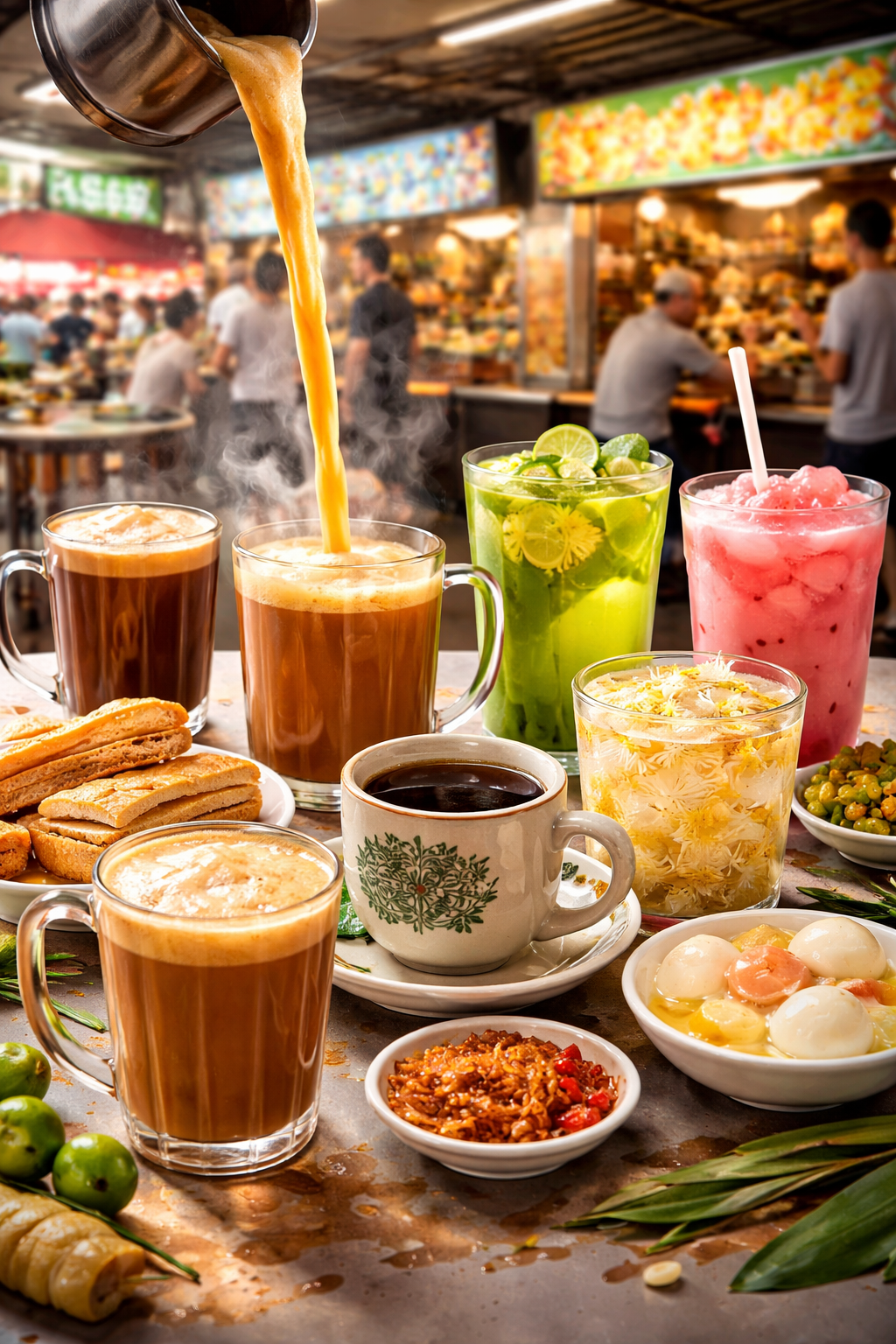
To drink traditionally in Singapore is to taste the city’s cultural layering. A single hawker centre can offer milk tea pulled to a froth, coffee brewed through a cloth filter, floral teas chilled in giant dispensers, and sugarcane juice pressed seconds before serving. These beverages aren’t rare specialties; they’re everyday companions to toast, noodles, curry, and late-night prata.
Teh tarik sits at the heart of many Singaporean supper scenes. It’s typically made with strong black tea and sweetened condensed milk, then “pulled” between two cups or metal jugs in a repeated pour. The pull creates foam and softens the mouthfeel, giving the tea a creamy texture without needing fancy equipment. The sweetness is prominent, but so is the tea’s backbone—especially when brewed strong. If you want something more aromatic, ginger milk tea (teh halia) adds heat and spice that pairs well with savory foods.
On the coffee side, kopi represents a distinct tradition that grew alongside kopitiams—social spaces where working people ate quickly and talked longer. Traditional kopi is often made from robusta beans roasted very dark, sometimes with sugar that caramelizes during roasting. The result is bold and smoky, designed to hold its flavor when mixed with milk. Brewing is done using a cloth “sock” filter, producing a potent coffee concentrate that can be adjusted in multiple ways.
Ordering kopi is practically a language lesson. Kopi usually means coffee with condensed milk. Kopi C swaps in evaporated milk for a smoother, less sugary cup. Kopi O is black with sugar; kopi O kosong removes sugar entirely. Regulars fine-tune with short add-ons: “siew dai” for less sweet, “gao” for stronger, “peng” to request it iced. Tea follows similar patterns, turning a simple menu into endless combinations without long explanations.
Singapore’s traditional drinks also highlight the need to cool down in tropical humidity. Barley water is one of the most common answers to heat: mild, lightly sweet, and easy to drink with anything from chicken rice to spicy noodles. Chrysanthemum tea is another favorite—floral, soothing, and often served cold. You’ll find it freshly brewed at stalls and widely sold in bottles, showing how heritage flavors adapt to modern convenience.
For those who like deeper, more unusual tastes, Chinese herbal teas (liang cha) are worth exploring. These beverages may be brewed from a mix of herbs, roots, and plants that can taste earthy or bitter. Some stalls sweeten them to make the bitterness approachable; others keep them strong for customers who want the traditional profile. Related items like tortoise jelly blur the line between drink and dessert—herbal jelly chilled and served with syrup, popular among those who enjoy bittersweet flavors.
Fruit and plant-based drinks bring a different kind of tradition. Sugarcane juice is pressed from fresh stalks and served immediately. The taste is naturally sweet with a grassy note, and adding lime makes it brighter and less cloying. Another nostalgic beverage is bandung, which combines rose syrup with milk. Its pink color and floral aroma make it instantly recognizable, and it’s commonly found at Malay stalls and casual eateries.
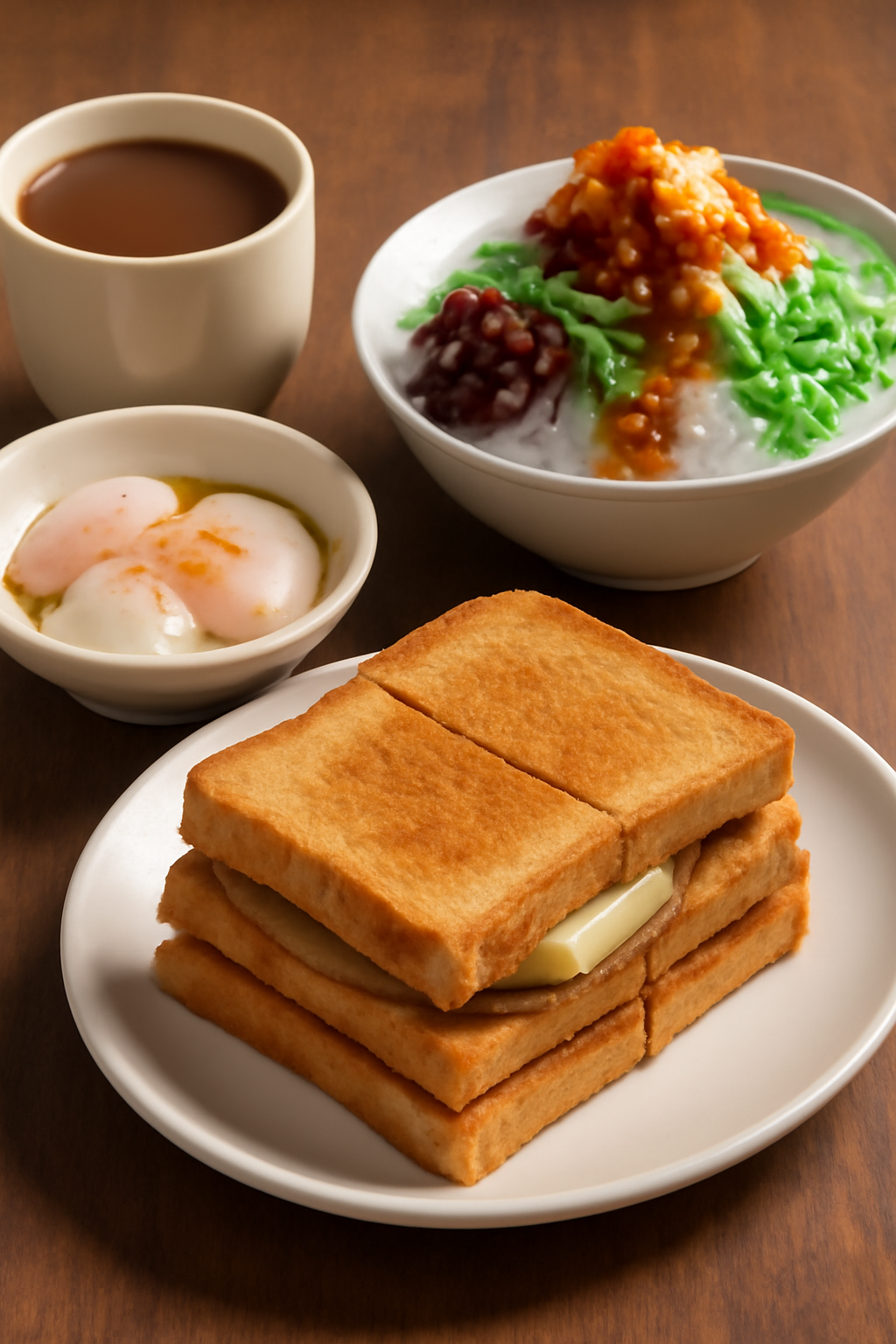
What makes these drinks truly “Singaporean” is how they fit into daily routines. A classic breakfast might be kopi or teh with kaya toast, butter, and soft-boiled eggs—the sweetness and bitterness balancing each other. Spicy lunches often call for sugarcane juice or barley water. Night-time gatherings at prata shops frequently include teh tarik, where the drink becomes part of the social rhythm.
To explore Singapore through its beverages, skip the tourist checklist and follow local habits: order a kopi the way regulars do, try a chilled chrysanthemum tea on a hot day, and watch teh tarik being pulled into foam. Each cup offers a small, drinkable lesson in how Singapore’s cultures meet, mix, and stay delicious.