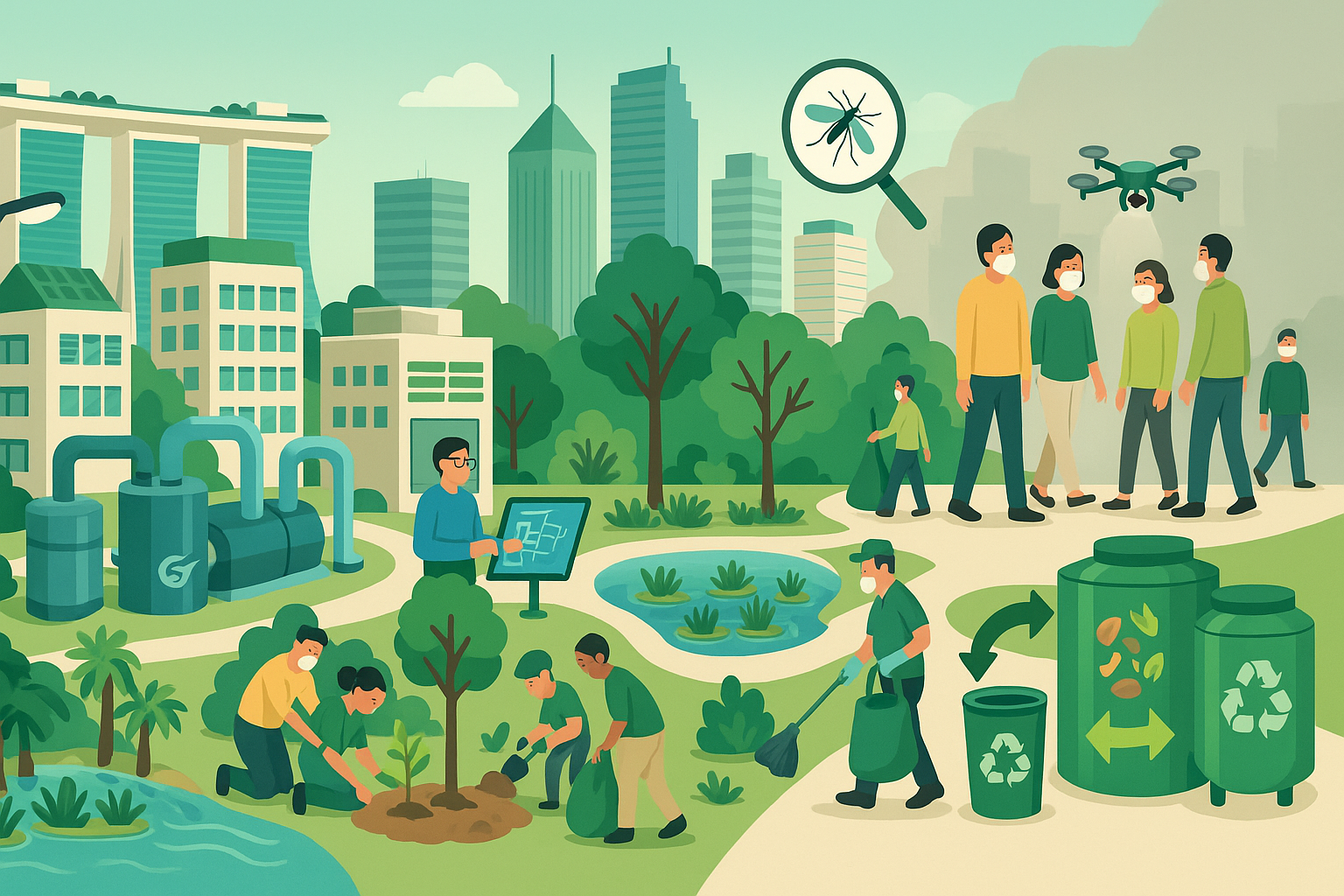
Singapore’s environmental health strategy is shifting from control to co-creation, blending technology, nature-based design, and citizen action to handle complex risks—haze volatility, climate-driven rainfall extremes, and persistent vector threats.
Technological innovation is central. Smart sensors now track air quality, noise, and temperature at granular scales, enabling hyper-local alerts and targeted enforcement. Buildings leverage analytics to optimize ventilation and filtration, improving indoor air during pollution episodes while conserving energy. In water, advanced membranes and UV disinfection enhance safety margins, and digital twins of drainage networks anticipate flood risk, protecting both property and public health.
Nature-based solutions round out the toolkit. Restored mangroves and coastal vegetation buffer storm surges and improve seawater quality; inland, rain gardens and constructed wetlands filter pollutants and temper heat. These green systems offer co-benefits—biodiversity, recreation, stress reduction—linked to mental and cardiovascular health.
Circular economy measures are accelerating. Producer responsibility schemes for electronics and packaging keep toxics out of the environment and raise recycling rates. Food waste valorisation—anaerobic digestion, co-digestion with wastewater sludge, or black soldier fly larvae—cuts methane and returns nutrients to agriculture. Cleaner material cycles translate into fewer vermin, less odor, and reduced vector potential in dense neighborhoods.
Haze remains an external swing factor. Preparedness now includes stockpiles of suitable respirators, guidance tailored to job types, and procurement policies encouraging deforestation-free supply chains. Public dashboards demystify PSI components, while healthcare providers plan for surges in asthma and COPD exacerbations. Schools, sports bodies, and employers rehearse threshold-based activity changes to keep people safe.
Vector-borne disease management is embracing precision. Data-driven mapping prioritizes inspections; novel tools—from Wolbachia-based mosquito population suppression to improved larvicides—complement source reduction. Public participation is critical: simple weekly routines and prompt reporting close the last mile between policy and household behavior.
Heat resilience is moving faster as nights warm and humidity rises. Shade audits, cool materials, and urban ventilation corridors are being mainstreamed. District cooling and retrofits of older estates bring equitable benefits, while building standards ratchet up expectations for thermal comfort without sacrificing air quality.
Governance is evolving to keep pace. A rising carbon price pushes cleaner energy and transport, while green finance unlocks retrofits and nature-based projects. Metrics are expanding beyond compliance: health-linked indicators—avoidable hospitalisations, heat-related emergency visits, school absenteeism during haze—help evaluate real-world impact.
Community remains the multiplier. SG Clean and “Keep Singapore Clean” instill hygiene habits; residents’ committees and youth groups organize clean-ups, tree-planting, and dengue walks. Clear communication, trust in institutions, and consistent enforcement sustain participation over time.
The next chapter is about resilience with co-benefits: cutting emissions while cooling streets; capturing resources while shrinking pests; restoring ecosystems while improving mental health. In a dense, tropical city, the healthiest environment is the one designed and maintained by everyone—public agencies, businesses, and citizens acting together.