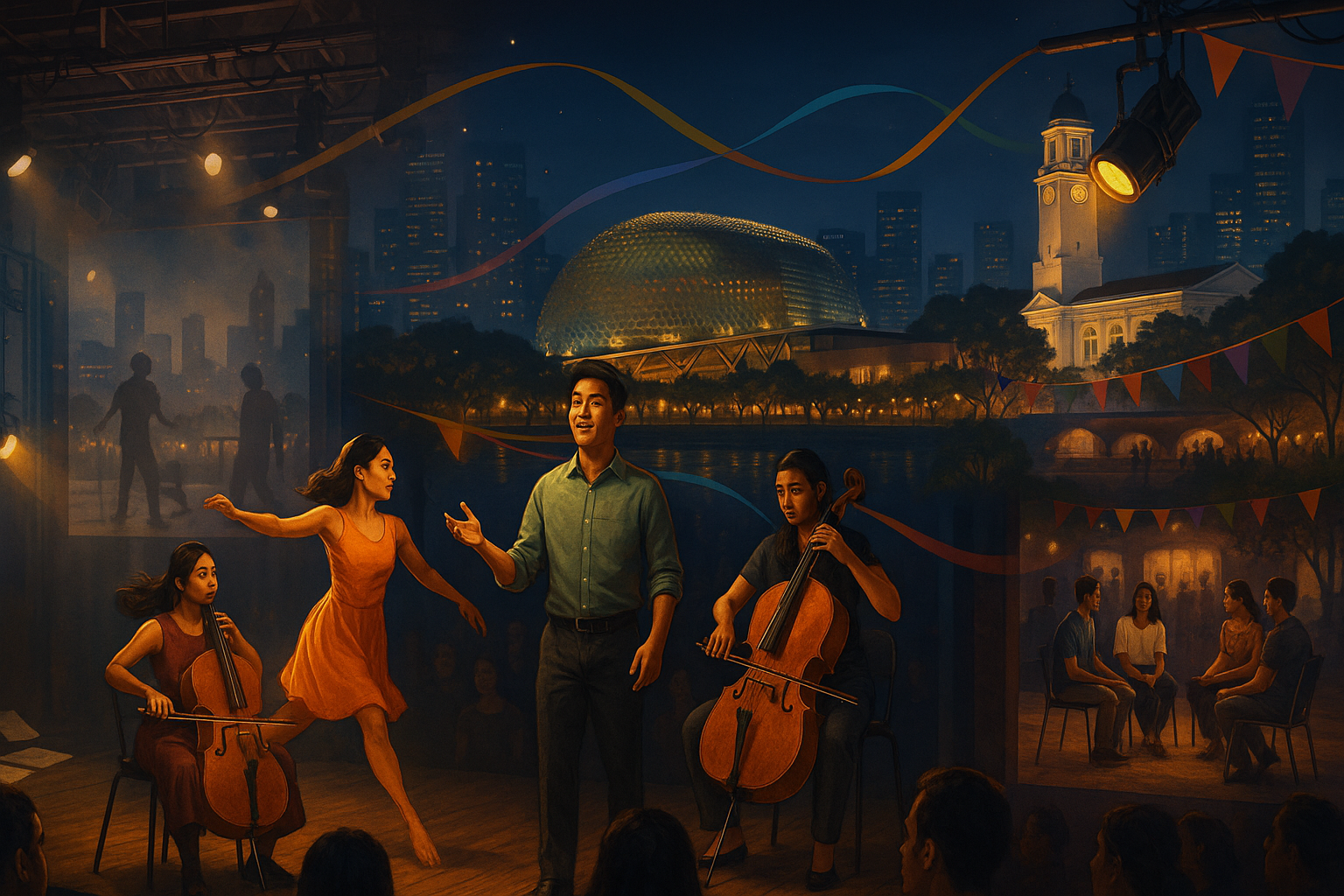
What makes Singapore’s theatre distinctive is not scale but curiosity. The city has built venues, schools, and funding pathways that encourage artists to test ideas quickly and refine them in public. This restless cycle traces back to early touring troupes and community clubs, and it now embraces everything from reimagined classics to documentary theatre and interdisciplinary performance.
The built environment sets the stage. Esplanade – Theatres on the Bay is the flagship, with multiple halls suited to drama, dance, and music. Victoria Theatre and Concert Hall blend heritage with modern tech. Drama Centre, Gateway Theatre, KC Arts Centre, and an archipelago of black boxes in Goodman and Aliwal support works of many scales and budgets, making experimentation viable.
Company ecosystems keep audiences engaged year-round. WILD RICE foregrounds local stories and bold reinterpretations. The Necessary Stage probes civic and social themes through collaborative creation. Pangdemonium programs contemporary plays with cathartic bite. TheatreWorks, Singapore Repertory Theatre, and agile indie groups extend the repertoire through co-productions, touring, and site-specific staging.
Festivals provide a shared pulse. The Singapore International Festival of Arts convenes international artists and commissions local work, inviting cross-border dialogue. The M1 Fringe champions process-driven pieces and new voices. Campus and community festivals act as feeders, ensuring that experimentation doesn’t happen in a vacuum but in front of audiences ready to be surprised.
Behind the scenes, training and support structures are robust. LASALLE and NAFA produce graduates across acting, design, and production; internships and mentorships with established companies close the gap to professional practice. Technical excellence—from lighting design to stage management—underwrites ambitious storytelling.
Multilingual dramaturgy is the city’s secret engine. Productions often mingle English with Mandarin, Malay, Tamil, and dialects, using surtitles where needed. This mingling yields humor, tension, and musicality specific to Singapore’s speech patterns and social realities, refreshing familiar themes like home, migration, and generational change.
For audiences, the experience is navigable and welcoming. Expect clear advisories on themes and language, reasonable ticket tiers, and frequent post-show conversations. Newcomers can start big at the Esplanade, then head to a black box for a close-up view of how ideas become theatre. In doing so, you’ll witness a city that treats the stage as both craft and civic practice—a place where stories are made in dialogue with the world around them.