Singapore is home to a rich and diverse cultural landscape, and this diversity is reflected in the country’s traditional clothing. Although the global fashion industry often focuses on modern trends, traditional garments in Singapore hold significant cultural importance and are still very much a part of daily life. From the intricately embroidered kebaya to the gracefully draped saree, these garments serve as a reminder of the nation’s rich heritage and the multicultural society in which it thrives.
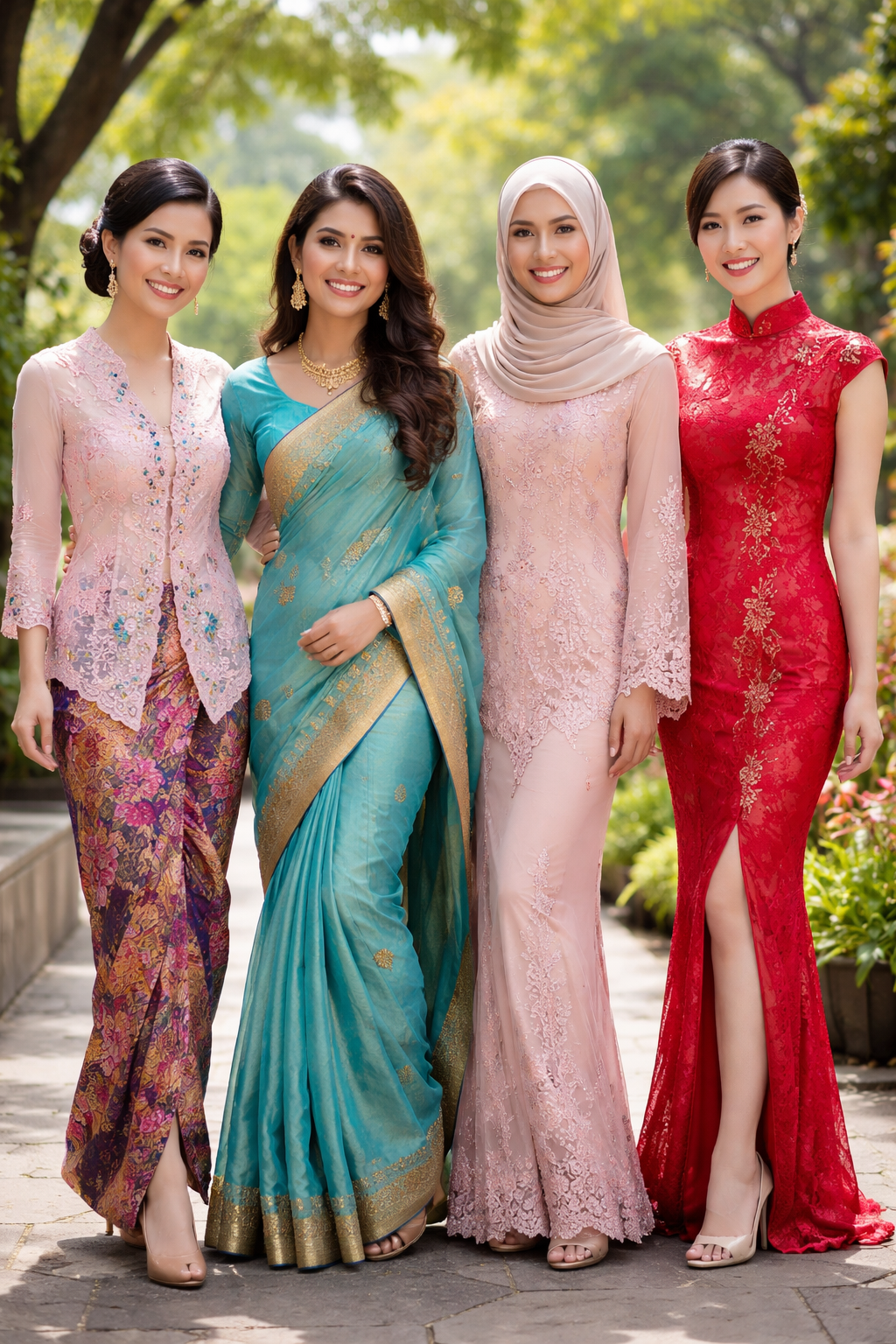
The kebaya is one of the most iconic pieces of traditional attire in Singapore, worn primarily by the Peranakan community. This blouse, with its detailed embroidery and sheer fabrics, was once worn with a sarong. Today, it is often seen on the runway and is frequently adapted by designers for both ceremonial and everyday wear. Shortened lengths, modern fabrics like chiffon, and new cuts have given the kebaya a fresh, contemporary feel while preserving its cultural significance. The kebaya has become a symbol of fashion-forward thinking while remaining deeply rooted in Singapore’s traditional heritage.
Similarly, the saree continues to be an important garment within the Indian community. Historically worn as a long piece of fabric wrapped elegantly around the body, the saree is now available in a range of fabrics and styles, from the traditional silk saree to more casual versions made of lighter materials like chiffon and georgette. This evolution has made the saree not only a traditional outfit but also a modern fashion choice that can be adapted to various occasions. Contemporary draping techniques, creative patterns, and embellishments make the saree a versatile garment, worn for everything from weddings to parties.
For the Malay community, the baju kurung and baju melayu are the traditional outfits of choice. These garments emphasize modesty while maintaining a high level of elegance. Modern versions of the baju kurung often feature lighter fabrics, updated cuts, and more vibrant colors, making it suitable for different settings beyond religious and cultural celebrations. The baju melayu, worn by men, has also evolved, with slim-fitting designs replacing the older, looser cuts. Both garments have been adapted to fit contemporary fashion trends while still reflecting the cultural values of the Malay community.
The cheongsam, a traditional Chinese dress, has also seen significant transformations over the years. Its slim-fitting design with a high collar and side slits has remained largely unchanged, but the materials, colors, and overall styling have become more diverse. The cheongsam is now often made from lighter fabrics, and variations in length and fit have made it a suitable choice for both formal and casual events. This adaptability has ensured the continued relevance of the cheongsam in modern Singapore.
As the world of fashion continues to evolve, it is heartening to see traditional clothing still holding a special place in Singapore’s fashion scene. With the ongoing efforts of designers to modernize and reinterpret these garments, traditional attire continues to thrive, making it both a reflection of the past and a testament to the future of fashion. Through innovation and creative adaptations, traditional clothing in Singapore has successfully bridged the gap between heritage and modernity.