Nyonya cuisine, more commonly known as Peranakan cuisine, is one of Singapore’s most unique and flavorful culinary traditions. This cuisine emerged as a result of the cultural exchange between Chinese immigrants and the local Malay population over several centuries. The blending of Chinese ingredients and techniques with Malay spices and cooking methods created a distinct and vibrant food culture that has become integral to Singapore’s gastronomic identity.
Peranakan food traces its origins back to the 15th and 16th centuries, when Chinese merchants, mostly from the Fujian and Guangdong regions, began to settle in Southeast Asia. These early settlers eventually intermarried with the Malays, resulting in a new community known as the Peranakans or Straits Chinese. Over time, the Peranakans developed their own unique culture, which extended to their culinary practices. Chinese influences can be seen in the use of soy sauce, noodles, and stir-frying techniques, while Malay influences are evident in the use of aromatic herbs and spices like turmeric, lemongrass, and chilies.
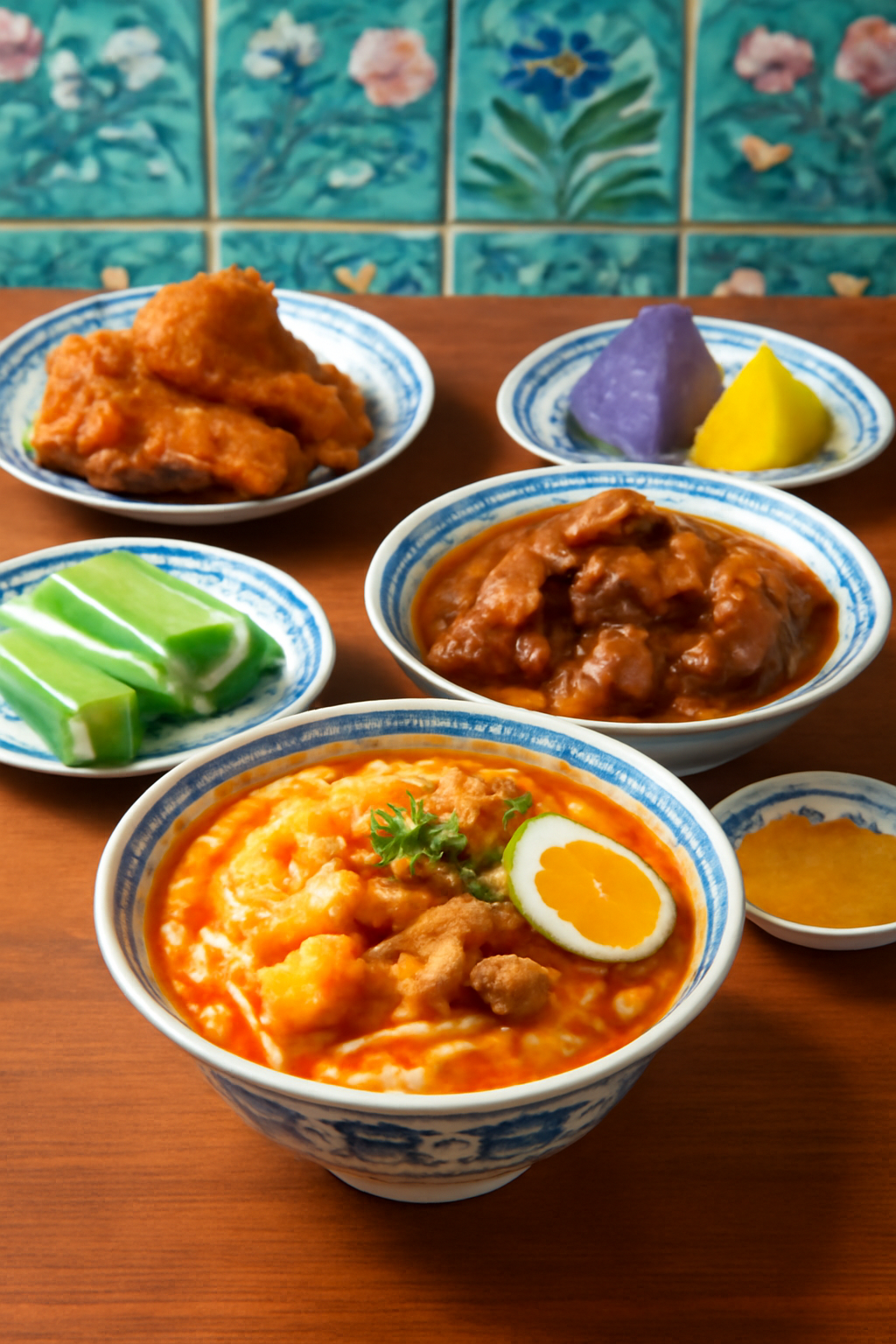
The hallmark of Peranakan cuisine is its complex and balanced flavor profile. Dishes are known for their ability to combine sweet, sour, salty, and spicy elements in perfect harmony. One of the most iconic dishes of Nyonya cuisine is laksa, a spicy noodle soup made with a rich, coconut-based broth. The broth is infused with a variety of spices, such as chili, lemongrass, and shrimp paste, while the noodles and other ingredients reflect Chinese culinary influences.
Another well-known Peranakan dish is babi pongteh, a savory stew made with pork and fermented soybeans, slow-cooked until the meat is tender and flavorful. This dish exemplifies the Peranakan skill of using simple ingredients and transforming them into something rich and complex through slow cooking.
Peranakan cuisine is not just about savory dishes; it also includes an impressive array of desserts, collectively known as kueh. These sweet treats are often made from ingredients like coconut milk, pandan leaves, and glutinous rice, creating a delightful combination of textures and flavors. Kueh lapis, a layered cake made from rice flour and coconut milk, and kueh durian, a durian-based dessert, are among the many sweet offerings that showcase the ingenuity and creativity of Nyonya chefs.
The cooking techniques used in Peranakan cuisine are as varied as the flavors themselves. While braising and stewing are common methods used to tenderize meat and infuse dishes with rich flavors, frying is also a popular technique, particularly for creating crispy textures in dishes like ayam goreng (fried chicken). Each cooking method plays a vital role in developing the complex and balanced flavors that define the Peranakan dining experience.
Nyonya cuisine remains a key part of Singapore’s food scene, with both traditional recipes and modern interpretations flourishing in local eateries. For those looking to experience the true essence of Singapore’s multicultural heritage, tasting Peranakan food is an essential experience that offers a delicious fusion of cultures, history, and flavor.