Singapore’s health technology strategy is moving toward a learning health system—one that continuously improves by turning routine data into better practice. The NEHR provides the substrate: cross-institutional records that, with consent and safeguards, support quality improvement, research, and clinical decision-making. When evidence updates, order sets and pathways can be revised system-wide, and outcomes can be tracked at scale.
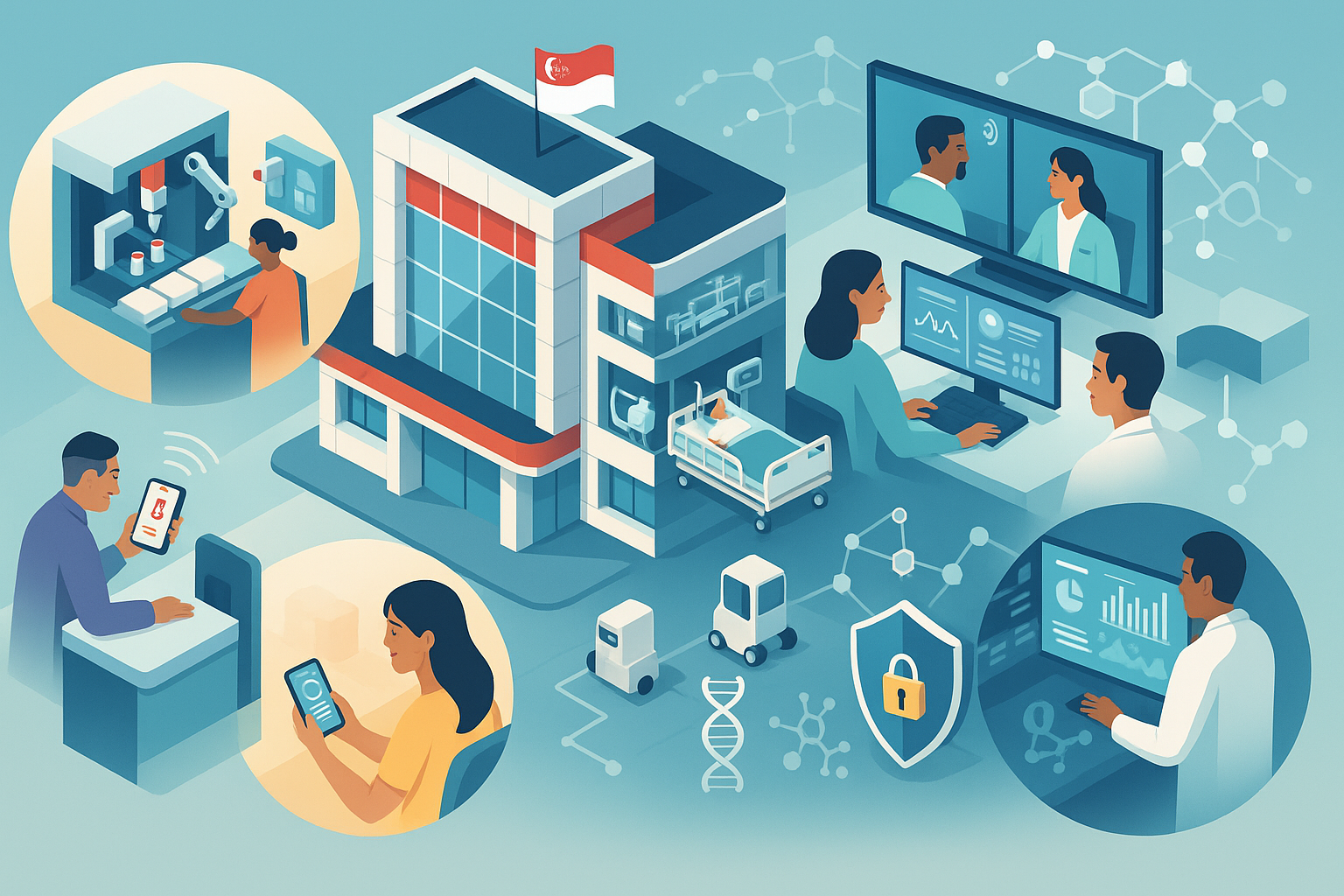
Front doors are digital. HealthHub consolidates scheduling, payments, and results into a single experience, reducing friction that deters follow-up. Virtual triage determines when teleconsults are safe and when in-person review is necessary. For many ambulatory conditions, video visits and asynchronous messaging make care timelier. Patients with chronic disease pair these touchpoints with home devices, allowing teams to intervene early rather than waiting for crises.
In hospitals, a layered stack of automation, analytics, and AI supports reliability. Pharmacy systems automate dispensing with barcode verification; closed-loop medication administration cuts errors significantly. Imaging AI prioritises urgent studies, while quantitative tools measure lesion growth or lung involvement, aiding longitudinal assessment. Early warning scores, fed by continuous monitoring on general wards, trigger timely escalation and have been associated with fewer ICU transfers in multiple implementations globally.
Operations are optimised with data. Bed management dashboards predict discharges, supply chains are tuned to caseload patterns, and transport robots free porters for direct patient support. These efficiencies aren’t about shaving seconds—they’re about reducing delays that stress patients and staff, and about making room for complex care.
Interoperability remains a strategic priority. HL7 FHIR-based interfaces, vendor-neutral archives, and identity management standards reduce fragmentation. Safe innovation is enabled by sandboxes and structured procurement, so startups and established vendors can prove value without risking clinical stability. Cybersecurity is treated as a clinical safety domain, with layered defenses, continuous monitoring, and clear incident playbooks.
Precision medicine is steadily integrated. For oncology, molecular tumour boards interpret sequencing to personalise therapy; pharmacogenomics pilots inform prescribing for select drug classes. Population analytics identify rising-risk cohorts for outreach, aligning with primary care reforms that emphasise continuity and prevention.
Crucially, the system invests in people. Clinicians receive digital fluency training; data stewards and clinical informaticians bridge bedside and backend; and governance forums include patient voices. Interfaces are co-designed to minimise clicks and reduce cognitive load, while alert thresholds are tuned to avoid fatigue. Public-facing education and assisted digital counters ensure older adults and residents with limited literacy can benefit.
Singapore’s learning health system is not a single platform but a disciplined way of working: capture data once, use it many times; automate the brittle handoffs; validate AI locally; and always measure impact on outcomes that matter to patients—safer care, shorter waits, and support that reaches into the home.