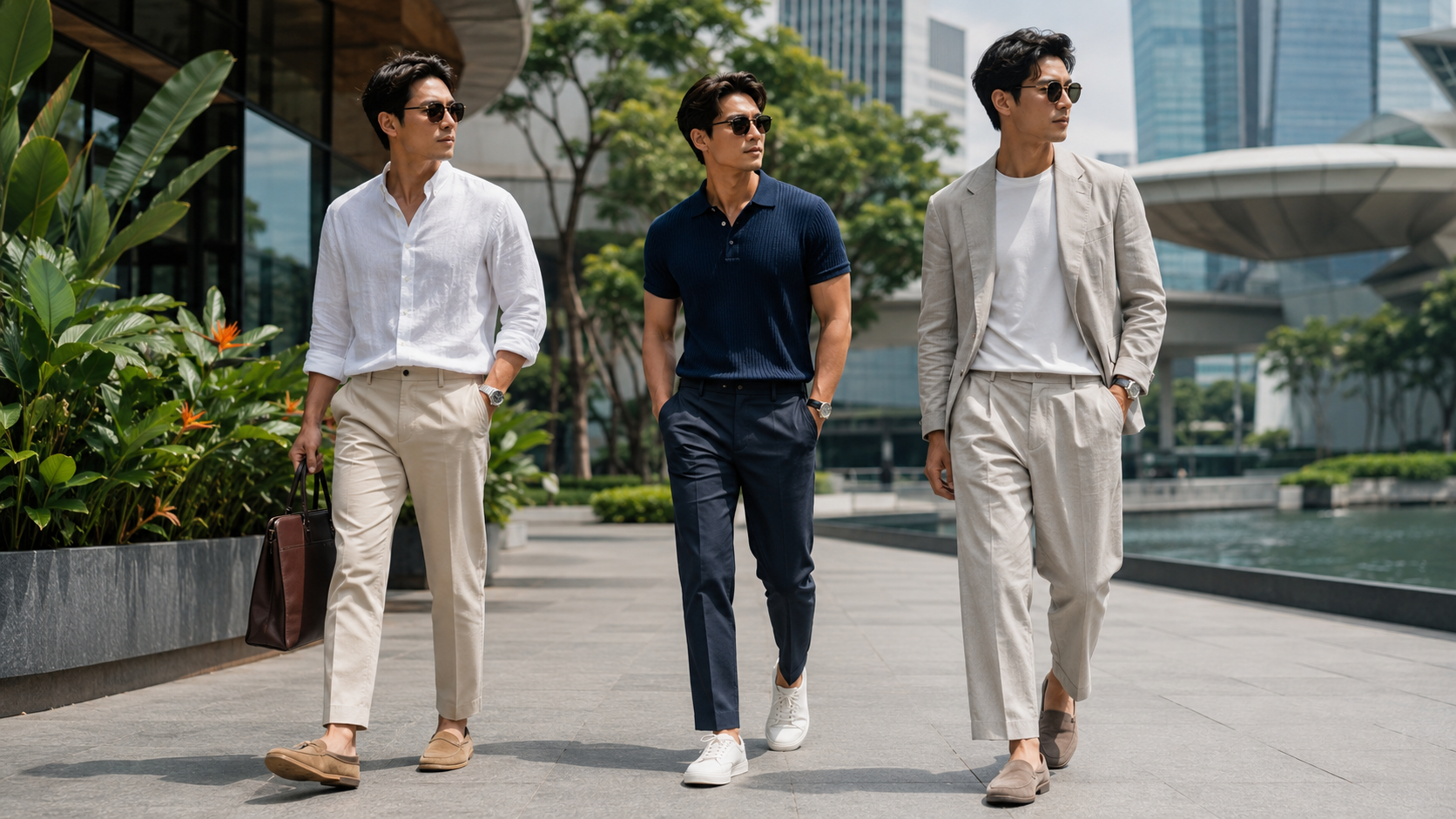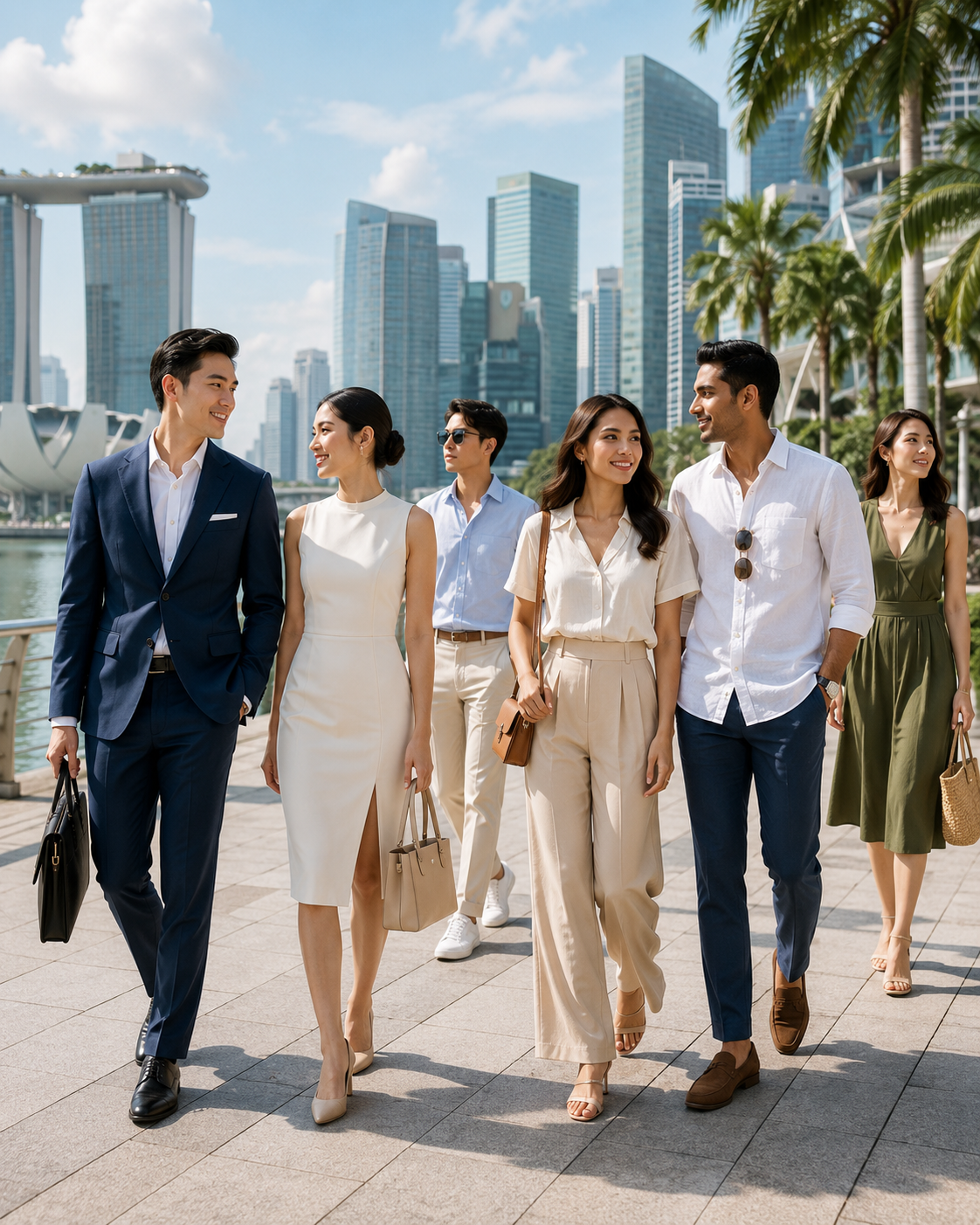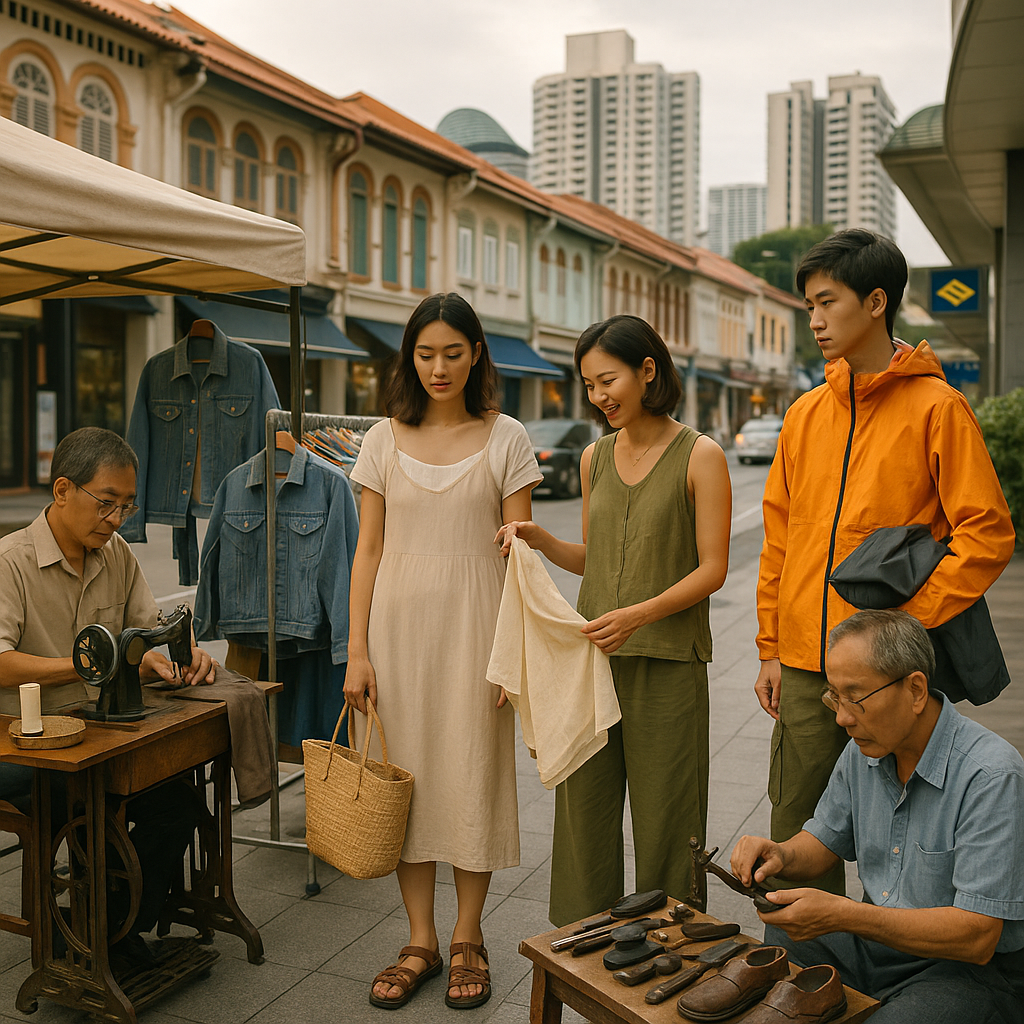
Sustainability is reshaping how Singapore dresses day to day, and you can see it right on the street. The rise of thrifting and swapping has expanded silhouettes and budgets, bringing archival pieces and quirky one-offs into rotation. In Bugis and Queenstown, racks of pre-loved denim jackets, vintage silk blouses, and ’90s cargo trousers lend texture to an otherwise minimalist city palette.
Clothing swaps and rental platforms foster experimentation. The Fashion Pulpit’s swap model normalizes borrowing statement dresses for events and returning to a base of mixable staples. Rental options reduce impulse buys, while tailoring services extend the life of well-loved garments. Repair cafés and cobblers—from key-cutter kiosks to mall workshops—keep sneakers fresh and leather bags in play.
On the streets, the sustainable look reads as eclectic but edited. A vintage slip layered over a modern tee, fisherman sandals with re-soled straps, a raffia tote from a local maker. Natural fibers dominate—linen, cotton, silk—alongside recycled nylon for rain shells and totes. Colors skew earthy: rust, leaf green, oatmeal, with the occasional citrus pop from a secondhand windbreaker.
Local brands are part of the shift. Beyond The Vines releases utilitarian pieces in seasonless palettes; Yacht 21 and Esse prioritize breathable fabrics and thoughtful production runs; Love, Bonito refines fit to encourage repeat wear; Charles & Keith experiments with plant-based or recycled materials in select lines. The goal is longevity—pieces that style multiple ways, resist trend fatigue, and withstand the climate.
Care rituals complete the cycle. Cold washes, mesh bags, and gentle detergents preserve fibers; air-drying on balcony racks saves energy. A basic mending kit—needles, buttons, fabric tape—lives in many apartments. Shoe trees and desiccant packs fight humidity, preserving leather.
Styling-wise, sustainability means creativity. Capsule wardrobes pair a linen blazer with three bottoms, a knit tank with two skirts, and a printed scarf that rotates as belt, headband, or bag charm. Jewelry made by local artisans—resin, clay, reclaimed metal—adds personality without fast-fashion churn. When rain hits, a packable poncho and water-resistant sling protect both outfit and electronics.
What emerges is a street style that prizes story over novelty. Each piece carries a past life, a tailor’s stitch, or a designer’s considered cut. It’s inspiring because it’s honest: a wardrobe built slowly, worn often, and tuned to the island’s rhythm of heat, rain, and movement. Singapore’s sustainable street style proves that looking sharp and treading lightly can be the same act.